What Is Cilantro root and How Can I Use It?
Cilantro root rewards a little know-how: how to choose it, cook it, store it, and substitute in a pinch. Browse 12 recipes to cook with it.
Key Points
- The pale taproot of cilantro, deeper and earthier than the leaves and built for long cooking.
- A Thai foundation ingredient, pounded with garlic and white peppercorns into a savory seasoning paste.
- Add it early, simmered or pounded into a base; it needs heat and time to bloom.
- Substitute minced lower cilantro stems, or stems plus a little ground coriander seed in a pinch.
- Buy bunches with roots attached at Asian grocers; freeze cleaned, minced root for months.
What is cilantro root?
Cilantro root is the pale taproot at the bottom of a cilantro plant, the part most Western cooks throw away. In Thai cooking it's a foundation ingredient, valued for a flavor deeper and earthier than the leaves.
It's still herbal, but rounded with a warm, almost nutty note that holds up to long cooking.
If you've only met cilantro as the bright green leaf, the root is a different animal. The leaf fades fast and turns harsh when overcooked. The root does the opposite, releasing its flavor slowly and standing up to pounding and long simmering.
Cooking With Cilantro Root
The classic Thai use is the seasoning paste known as the holy trinity: cilantro root pounded with garlic and white peppercorns in a mortar. That paste is the savory base under grilled meats and stir-fries.
It's exactly what flavors a Broiled or Grilled Marinated Chicken (Gai Yang), rubbed under the skin before the bird hits the heat.
The root also dissolves into curry pastes and soups. A Jungle Curry Paste (Kaeng Paa) leans on pounded root for its earthy backbone, and the root simmers cleanly into broths and braises like a Duck Curry without turning bitter the way chopped leaves can.
To prep it, scrub off the grit, trim the wispy hairs, then bruise or finely mince the root before pounding. A little goes a long way. One or two roots is plenty for a paste serving four.
Pairings and Common Mistakes
Cilantro root belongs to a Southeast Asian flavor world of garlic, white pepper, fish sauce, palm sugar, lemongrass, and galangal. It pairs especially well with pork and chicken, which is why it turns up in a Thai Sausage-Chiang Mai Style and in marinades for satay.
The biggest mistake is treating the root like the leaf and adding it at the end. Its flavor needs heat and time to bloom, so it goes in at the start, pounded into a paste or simmered into stock, not stirred in to finish.
The second pitfall is tossing it in without a wash. Roots trap soil in their fine hairs, so a quick rinse isn't enough. Soak and scrub them, or you'll get grit in the paste.
What to Use Instead
True cilantro root is hard to find outside Asian markets, so substitutes are the norm. The cleanest swap is the lower stems of a cilantro bunch, the pale part just above where the root would be.
Finely mince a good handful of stems to stand in for a couple of roots. The flavor is close, just a touch lighter.
If you have neither, a small amount of ground coriander seed plus extra cilantro stems approximates the warm, earthy depth, since the seed and the root share aromatic compounds. It won't be identical, but it carries the dish.
Buying and Keeping It
Look for cilantro sold in bunches with the roots still attached, common at Southeast Asian grocers and at farmers markets. Choose firm, cream-colored roots with no sliminess and leaves that still look lively, since tired tops mean tired roots.
Store the unwashed bunch in the fridge, roots wrapped in a damp paper towel and the whole thing in a loose bag, and use within about a week.
For longer storage, clean the roots, then mince or pound them and freeze in a small block or an ice cube tray. Frozen root keeps its punch for months and drops straight into a hot pan.
Quick facts
- In Chinese
- 香菜根
- British (UK) term
- Cilantro root
- en français
- coriandre racine
- en español
- raíz de cilantro
Recipes using cilantro root
There are 12 recipes that contain this ingredient.
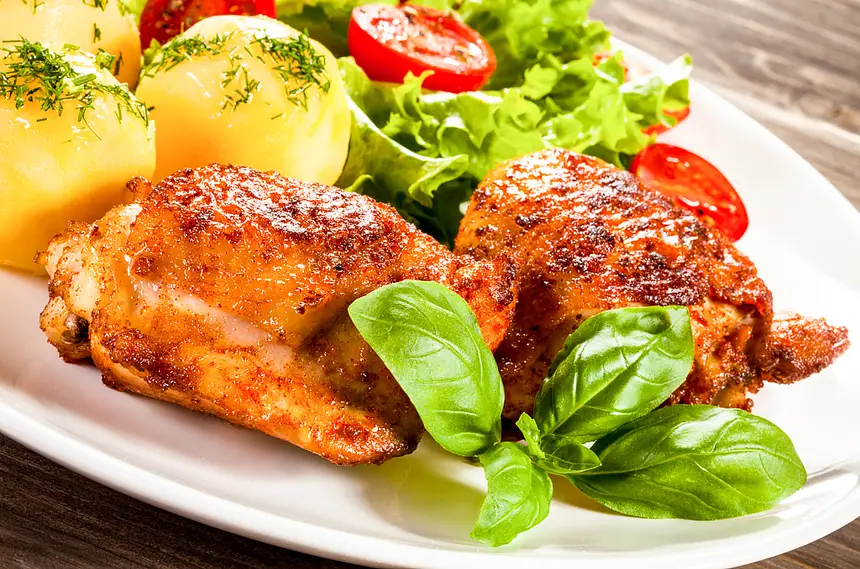
Broiled or Grilled Marinated Chicken (Gai Yang)


Broiled or Grilled Marinated Chicken (Gai Yang) recipe
Khao-Tung Hna-Tung (Crusty Rice with Shrimp Dip).

Khao-Tung Hna-Tung (Crusty Rice with Shrimp Dip). recipe

Duck Curry - Kaen of Duck
Thai duck curry (kaeng pet) simmered in coconut milk with a handmade curry paste of dried chilies, lemongrass, shrimp paste, and coriander seeds. Rich, aromatic, and deeply spiced.
Thai Southern Chicken
Southern Thai grilled chicken: chicken rubbed with a fragrant spice paste, even under the skin, marinated, then grilled over low coals until charred and juicy. Big, bold Thai flavor off the grill.
Deep-Fried Tofu with Peanut Sauce
Crispy fried tofu served with a Thai-style peanut dipping sauce made from garlic, cilantro root, chili, and rice vinegar. A spicy, tangy vegetarian appetizer or snack ready in 25 minutes.
Jungle Curry Paste (Kaeng Paa)
Thai jungle curry paste (kaeng paa) pounded from shallots, garlic, galangal, lemongrass, dried chilies, kaffir lime leaf and shrimp paste. Fiery, herbal base for water-based Thai curries.
Thai Satay with Spicy Peanut Sauce
Pork or chicken strips marinated in lemongrass, galangal, curry, and coconut milk, grilled on skewers with a from-scratch spicy peanut dipping sauce. Authentic Thai satay at home.

Thai Sausage-Chiang Mai Style
Homemade Sai Oua: ground pork packed with lemongrass, galangal, kaffir lime, cilantro root, and dried chilies, stuffed into natural casings and charbroiled. Northern Thai sausage done right.
Clay Pot Shrimp with Bean Thread Noodles
Thai-style clay pot shrimp with glass noodles, homemade cilantro-garlic-pepper pesto, ginger, and a savory sauce of fish sauce, oyster sauce, and sesame oil. Fragrant, slurp-worthy, and on the table in an hour.
Pad Phed Pladuk (Hot & Spicy Catfish).
Pad phed pladuk: a fiery Thai catfish curry built on a from-scratch pounded chili paste of lemongrass, galangal, and kaffir lime, with fish fried in fresh coconut cream. Bold, aromatic, and seriously hot.