What Are Chicken bones and How Can I Use Them?
Chicken bones is easier to cook with than it looks. Here's how to choose, use, and store them, what to substitute, and 7 recipes to get you started.
Key Points
- Saved carcasses, backs, necks, and feet; the home cook's best free source of stock.
- Simmer two to four hours below a boil for clear, gelatin-rich golden stock.
- Roast bones at 400°F (200°C) first for a deeper, amber stock; leave raw for white stock.
- Never salt the pot; stock concentrates as it reduces, so season the finished dish.
- Freeze raw bones up to a year and finished stock up to six months in portions.
What are chicken bones?
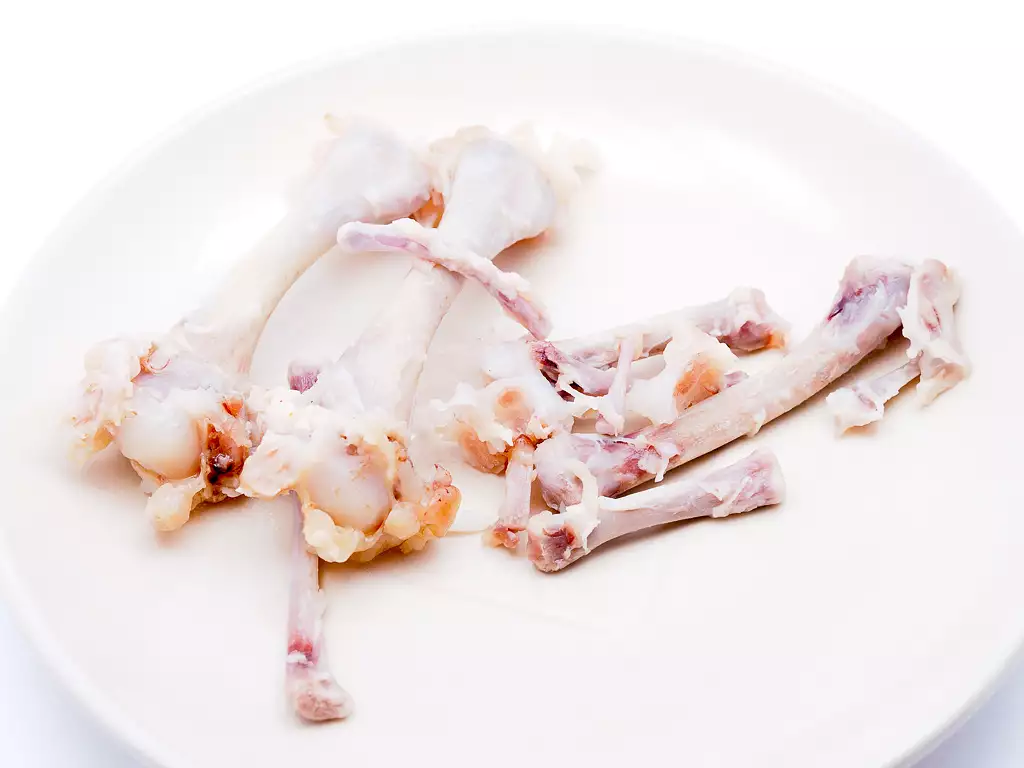
Chicken bones are the carcass, backs, necks, wing tips, and feet left after a bird is broken down, and they are the single most useful kitchen scrap a home cook keeps. Their one great job is stock: the clear, golden, savory liquid that underpins soups, risottos, sauces, and braises.
What makes them so good is balance. Chicken bones carry enough collagen to give a stock light body without the heaviness of pork or beef, plus marrow and clinging meat for clean, savory flavor. They are mild enough to slip into almost any dish.
Chicken feet, often sold separately, are the secret weapon: nearly pure collagen, they turn a thin stock into one that sets to jelly when cold.
Making Stock From Chicken Bones
The method is simple and forgiving. Cover the bones with cold water, bring it slowly to a bare simmer, and hold it there. Two to four hours is plenty for a flavorful, gelatin-rich stock; beyond that you gain little and risk muddy, bitter notes.
Keep it at a lazy simmer, never a hard boil. A rolling boil churns fat and scum back into the liquid and clouds the broth, which is why a great stock starts cold and stays gentle.
That principle drives Classic Chicken Stock and the slow, careful Henrietta's Homemade Chicken Stock alike.
Raw bones give a pale, delicate stock; roasting them at 400°F (200°C) until browned first gives a deeper, amber one. Use raw bones for a Classic White Stock and light cream soups, roasted bones when you want color and backbone.
Quick Chicken Stock shows the shortcut: a smaller batch of bones simmered an hour still beats anything from a carton.
Pairing and Common Mistakes
Stock loves the classic aromatic base of onion, carrot, and celery, rounded out with bay, peppercorns, parsley stems, and a clove of garlic. Hold heavy spices back so the stock stays neutral enough for any use.
The biggest mistake is boiling hard to speed things up. It does the opposite of what you want, emulsifying fat into a greasy, cloudy broth instead of a clear one. Patience is the whole technique.
The second mistake is salting the pot. Stock reduces as it simmers, concentrating any salt you add, so a perfectly seasoned pot turns harsh once it cooks down. Salt the finished dish, not the stock.
Substitutes
A whole leftover roast chicken carcass is the easiest source if you do not keep a bone bag, and it brings extra roasted flavor for free.
Turkey bones work identically and a little richer, as in Turkey Noodle Soup, while chicken backs and necks from the butcher are cheap and especially collagen-rich. Any poultry frame will do.
When you have no bones at all, a good low-sodium boxed broth or a spoonful of quality bouillon stands in. Neither matches homemade body, but they carry a dish, and bouillon lets you control the salt.
Buying and Storing
You rarely buy chicken bones outright; you save them. Keep a freezer bag going and toss in every carcass and wing tip until you have enough to fill a pot. Butchers also sell cheap backs and necks, plus collagen-rich feet, if you want to make stock on purpose.
Raw bones keep one to two days in the fridge and up to a year frozen, since bare bones with little meat freeze well. Simmer them straight from frozen; no thawing needed.
Finished stock keeps three to four days in the fridge and up to six months frozen. Freeze it in measured portions or ice-cube trays so you can pull exactly what a recipe needs. A good chicken stock sets to a soft jelly when chilled, the visible proof its collagen converted.
Quick facts
Where to find chicken bones: Chicken bones are usually found in the poultry section or aisle of the grocery store or supermarket.
- In Chinese
- 鸡骨头
- British (UK) term
- Chicken bones
- en français
- des os de poulet
- en español
- huesos de pollo
Recipes using chicken bones
There are 7 recipes that contain this ingredient.

Chicken Blackberry Vinegar


Blackberry vinegar chicken with a rich and flavourful demiglace. Great for a special occasion.

Classic Chicken Stock
Classic chicken stock simmers chicken bones with carrots, onion, celery, bay leaf, thyme, and peppercorns into a rich golden broth. The foundation of soups, sauces, risottos, and braises.

Henrietta's Homemade Chicken Stock
Homemade chicken stock simmered low and slow for 4 to 6 hours with chicken bones, onion, carrot, celery, thyme, and bay. Pure-flavored stock for soups, risotto, and sauces. Freezes for months.

Quick Chicken Stock
This quick and tantalizing chicken stock is the perfect starter for soups and gravy.

Authentic French Onion Soup
Authentic French onion soup built on a homemade veal-and-chicken stock and deeply caramelized onions, ladled over toasted croutons and broiled under a blanket of melted Gruyere. The real, from-scratch classic.
Classic White Stock
A culinary school-style white chicken stock made from blanched bones, mirepoix, and a classic sachet of herbs and spices. Simmered for hours and strained into a clear, clean-flavored foundation for soups and sauces.

Turkey Noodle Soup
Turkey noodle soup made from scratch with homemade bone broth, zucchini, carrots, and herbs. A from-the-carcass soup that turns leftover turkey bones into a rich, clear broth.