What Is Chardonnary vinegar and How Can I Use It?
Wondering what to do with chardonnary vinegar? This guide covers how to pick it, cook it, store it, and swap it, plus 3 recipes to put it to work.
Key Points
- A white wine vinegar made from Chardonnay; the spelling "chardonnary" is a typo for it.
- Crisp and clean with a touch more fruit and roundness than a generic white wine vinegar.
- Its softer edge suits delicate fish pan sauces and gentle vinaigrettes.
- Swap any plain white wine vinegar, or champagne vinegar for an even closer match.
What is chardonnary vinegar?
Chardonnay vinegar (sometimes typed "chardonnary") is a white wine vinegar made specifically from Chardonnay wine. It is a single-grape version of the broader white wine vinegar category, so it is crisp and clean with a touch more fruit and roundness than a generic bottle.
Because the grape ferments to a fairly soft, buttery wine, the vinegar tends to be a little less harsh than sharp white wine vinegars. That makes it a natural fit for delicate dishes.
It stars in a kiwi-laced pan sauce for Sauteed Halibut with Kiwi Chardonnay Sauce, and it suits gentle vinaigrettes like the one over Roasted New Potato Salad with Basil Vinaigrette, where a brasher vinegar would dominate. It also turns up in rich classics such as Escargots En Cercueils.
Any plain white wine vinegar substitutes for it directly; you lose a little of the soft fruit but the acidity is the same. Champagne vinegar is an even closer match if you have it.
Store it like any vinegar: sealed in a cool, dark cupboard, where it keeps for years. For the fuller story on choosing and using it, see the main white wine vinegar page.
Quick facts
- In Chinese
- chardonnary醋
- British (UK) term
- Chardonnary vinegar
- en français
- vinaigre chardonnary
- en español
- vinagre chardonnary
Recipes using chardonnary vinegar
There are 3 recipes that contain this ingredient.
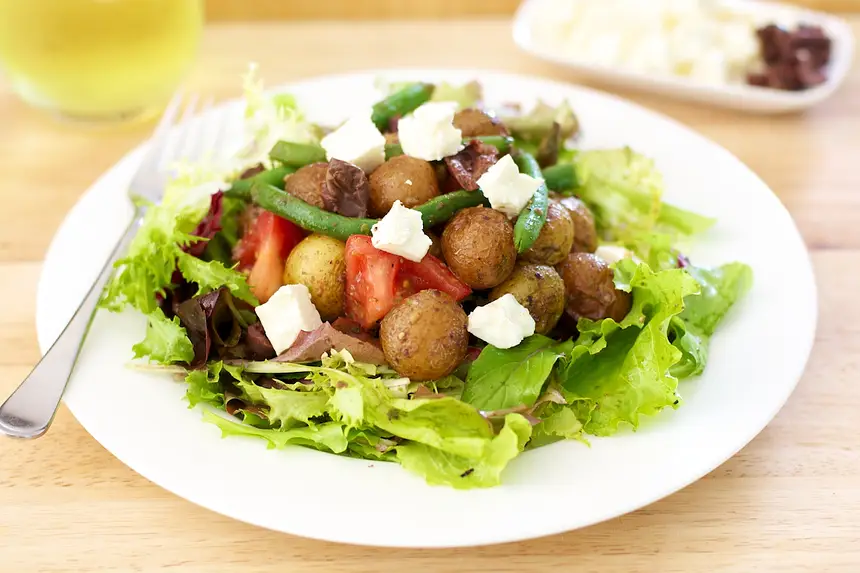
Roasted New Potato Salad with Basil Vinaigrette


Roasted new potatoes are soft on the inside, and crispy on the outside, tossed with a flavorful basil vinaigrette. Serve it with any your favorite main courses. If it's too hot to cook indoor, grill the potatoes over your barbeque instead.
Sauteed Halibut with Kiwi Chardonnay Sauce
Sauteed halibut with kiwi chardonnay sauce: pan-seared fillets in golden butter, topped with a bright kiwi beurre blanc. A restaurant-style fish dinner with tropical fruit flair.
Escargots En Cercueils
Elegant French escargot appetizer baked in puff pastry "coffins" with white wine butter sauce and toasted hazelnuts for sophisticated entertaining.