What Is Orange blossom water and How Can I Use It?
Wondering what to do with orange blossom water? This guide covers how to pick it, cook it, store it, and swap it, plus 6 recipes to put it to work.
Key Points
- Floral distillate of bitter-orange blossoms; an aromatic that perfumes rather than flavors a dish.
- A staple of Middle Eastern and North African sweets, syrups, custards, and drinks.
- Use it by the teaspoon or drop, off the heat; boiling drives the delicate aroma away.
- Too much turns soapy and medicinal, so start with half and adjust to taste.
- Rosewater is the closest swap; store the bottle capped, cool, and dark.
What is orange blossom water?
Orange blossom water is a fragrant liquid distilled from the flowers of the bitter orange tree (Citrus aurantium), capturing their heady floral perfume in water.
It is also sold as orange flower water. The two names mean the same thing.
The flavor is purely aromatic. It carries the scent of orange blossom, sweet, floral, and faintly citrusy, with none of the acid or sweetness of the fruit, so it perfumes a dish rather than flavoring it the way juice would.
A staple of Middle Eastern, North African, and Mediterranean kitchens, it scents syrups, pastries, custards, and drinks. It is the cousin of rosewater, made the same way from a different flower, and the two are often used interchangeably or together.
How to Use Orange Blossom Water
Use it by the teaspoon, or even the drop. This is a potent aromatic, and its job is a whisper of perfume, not a flood, so it goes in at the end of a recipe rather than being cooked hard.
It shows its classic role in syrup-soaked pastries. Stirred into the sugar syrup poured over baklava-style sweets, it perfumes a Walnut Phyllo Rounds, and it scents the semolina cake soaked in syrup that makes Namurrah. It belongs in the syrup off the heat, since boiling drives the aroma off.
It also lifts creamy desserts. A teaspoon folded into the batter perfumes a Mandarin Orange Cheesecake, and a few drops stirred into thick yogurt make the Orange Blossom Yogurt that crowns a Polenta Cake with Orange Blossom Yogurt, Berries, & Pistachios.
Beyond sweets, it flavors drinks. It is the floral note in a classic Ramos gin fizz, perfumes mint tea and lemonade across North Africa, and a drop or two scents whipped cream or a fruit salad.
Stir it in at the finish and taste as you go.
The aroma is fragile and easy to overdo, so add half of what you think, then adjust.
Pairing and Common Mistakes
Orange blossom water belongs with honey, pistachio, almond, dates, and semolina, the backbone of Levantine and North African sweets. It flatters citrus, berries, yogurt, and chocolate, and pairs naturally with rosewater and warm spices like cinnamon and cardamom.
The biggest mistake by far is using too much. Past a small dose the perfume tips from lovely into soapy and medicinal, the taste of cheap cologne, and once it is stirred into a batter you cannot pull it back out, so always start light.
The second is boiling it. The aroma compounds are volatile and cook off with heat, so add it to a syrup or custard after it comes off the stove, not while it simmers.
The third is confusing strengths. Concentrated distilled versions from Middle Eastern grocers are far stronger than the diluted French type sold for baking, so taste your particular bottle and scale the amount to it.
Substitutes
Rosewater is the natural stand-in, made the same way and used in the same dishes, though it brings a rose perfume rather than orange. Use it in equal amounts when an orange note is not the whole point.
For something closer to the orange character, a little finely grated orange zest gives floral citrus oils, or a few drops of orange extract lend the scent, though neither has the same delicate flowery quality. Combine zest with a drop of vanilla to round it out.
If you have neither, a splash of an orange liqueur such as Grand Marnier or Cointreau adds orange aroma plus a little alcohol that cooks off, useful in syrups and creams. None of these match the pure floral note, so adjust to taste.
Buying and Storing Orange Blossom Water
Find it at Middle Eastern and Mediterranean grocers, the international aisle of larger supermarkets, and online. Check the label: some bottles are a pure distillate while others are water with added flavoring, and the pure distilled kind has the truest aroma.
Strength varies a lot between brands, so when you open a new bottle, smell and taste a drop before committing it to a recipe. Lebanese and Tunisian distillates in particular run strong and need a lighter hand.
Store the bottle tightly capped in a cool, dark cupboard away from the stove. Kept sealed and out of light it holds its aroma for a year or two; an opened bottle gradually fades, so buy a size you will use within a year.
If the smell has gone flat or faintly stale, the water has lost its perfume.
Replace it rather than adding more, which only thins the dish without restoring the scent.
Quick facts
- In Chinese
- 橙花水
- British (UK) term
- Orange blossom water
- en français
- l'eau de fleur d'oranger
- en español
- agua de azahar
Recipes using orange blossom water
There are 6 recipes that contain this ingredient.
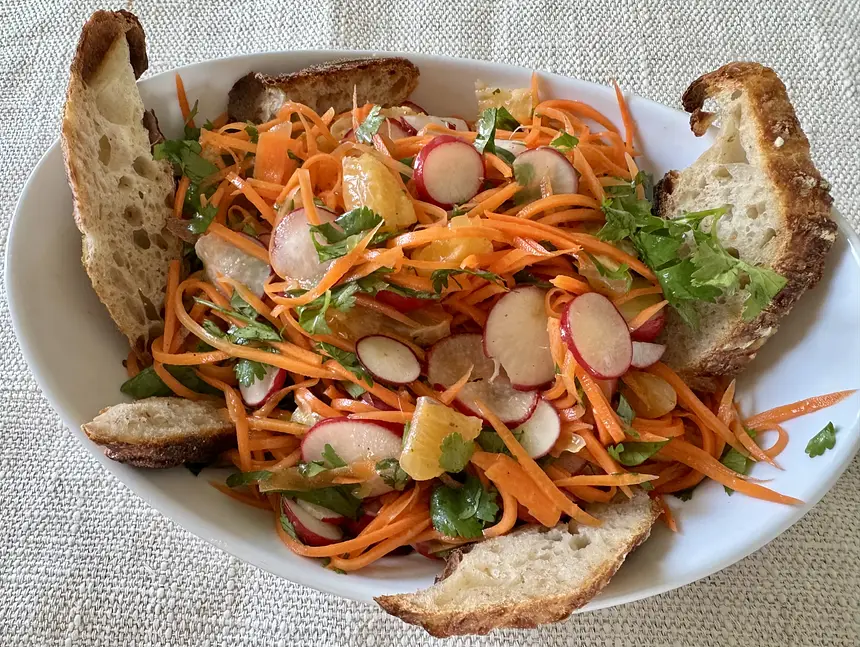
Carrot, Orange & Radish Salad


A vibrant, refreshing salad combining crisp carrots, juicy oranges, peppery radishes, and fresh cilantro, tossed in a zesty citrus dressing with a hint of orange blossom water and cinnamon. Perfect as a light side dish or a healthy lunch, served with warm pita bread.

Polenta Cake with Orange Blossom Yogurt, Berries, & Pistachios
Grilled polenta cake with orange blossom yogurt, fresh strawberries, and pistachios. A sophisticated Middle Eastern-inspired dessert built from pantry staples and summer fruit.
Walnut Phyllo Rounds
Flaky phyllo spirals filled with walnuts, pistachios, candied orange peel, and orange blossom water, baked golden and soaked in lemon syrup. A baklava-style treat that makes about 42 pieces.
Mandarin Orange Cheesecake
Mandarin orange cheesecake wrapped in crackling phyllo pastry, filled with cream cheese and ricotta, then soaked in orange blossom syrup for a Middle Eastern twist on a classic.
Namurrah or Harriseh
Traditional Middle Eastern semolina cake drenched in lemon syrup. This easy yogurt-based dessert bakes golden brown and soaks up fragrant citrus syrup for a moist, tender treat perfect with tea.

Namurrah
Middle Eastern semolina cake soaked in citrus syrup and topped with toasted almonds. This yogurt-based dessert bakes up golden with a tender, moist crumb that pairs beautifully with tea.