What Is Farmer's cheese and How Can I Use It?
Here's everything worth knowing about farmer's cheese and how to pick it, what it is, how to store it, and what to use instead, plus 6 recipes to cook tonight.
Key Points
- Fresh, mild cheese made by pressing drained curds; like cottage cheese but drier and firmer.
- Clean, barely salted flavor that swings sweet or savory, so season it to taste.
- A baking workhorse for blintzes, dumplings, and cheesecakes; its low moisture stays put.
- Drier and grainier than cream cheese; loosen with milk or butter for a smooth spread.
- Dry-curd cottage cheese, drained ricotta, or paneer are the closest swaps; match the moisture.
What is farmer's cheese?
Farmer's cheese is a fresh, mild cheese made by curdling milk, draining the whey, and pressing the curds until most of the moisture is gone. Think of it as cottage cheese taken a step further: same fresh, tangy start, but drier and firmer, crumbly enough to slice or grate.
It carries a clean, milky flavor with a gentle tang and almost no salt, which makes it a blank canvas.
It takes on whatever you add, sweet or savory.
Because it is pressed rather than left loose, farmer's cheese holds together instead of weeping the way wetter fresh cheeses do, which is why bakers reach for it.
How to use it
Farmer's cheese is a workhorse for fillings. Its low moisture means it bakes up creamy without making a crust or batter soggy, the reason it anchors Eastern European classics like Varenyky (Ukrainian Filled Dumplings) and a rich Paskha (Russian Cheesecake).
It is the traditional filling for blintzes, mashed with sugar, egg, lemon, and a pinch of salt, as in Stage Deli's Cheese Blintzes. It also goes into savory baked pies like an Easter Pie (pizza piena).
Eaten plain, it is good crumbled over salads or spread on bread with honey or jam. Mash it with herbs and garlic for a quick, light spread.
Pairing and mistakes
Its mildness lets it swing sweet or savory. Sweet, it loves sugar, vanilla, raisins, and fruit; savory, it takes to dill, chives, scallions, and black pepper. Because it is barely salted, season it to taste rather than assuming it will carry the dish.
The common mistake is treating it like cream cheese in a spread without adjusting. Farmer's cheese is drier and grainier, so loosen it with a splash of milk or some softened butter when you want it smooth and spreadable.
The other is buying the wrong texture.
Brands vary from soft and moist to very dry; for filling and slicing you want a firm, pressed block, not a loose tub.
Substitutes
Pressed dry-curd cottage cheese or well-drained ricotta are the closest swaps in baked fillings, both mild and a little wetter, so drain them first. Indian paneer is a firm, fresh, unsalted cheese that stands in nicely for slicing and crumbling.
For a spread, cream cheese works if you want it richer and smoother. Whatever you pick, match the moisture: a wet swap in a filling can turn a pie or a dumpling soggy.
Buying and storing
Look for farmer's cheese in the refrigerated case, often labeled "farmer cheese" or sold under Eastern European or kosher brands, as a foil-wrapped block or a small tub. The firmer, drier blocks are best for baking and slicing.
Keep it sealed and cold, and use it within about a week of opening, since fresh cheeses spoil faster than aged ones. If it releases a little liquid, pour it off.
It can be frozen for cooking, where it comes out more crumbly, but it is best used fresh in spreads and on a plate.
Quick facts
- In Chinese
- 农民的奶酪
- British (UK) term
- Farmer's cheese
- en français
- fromage fermier
- en español
- queso del granjero
Recipes using farmer's cheese
There are 6 recipes that contain this ingredient.
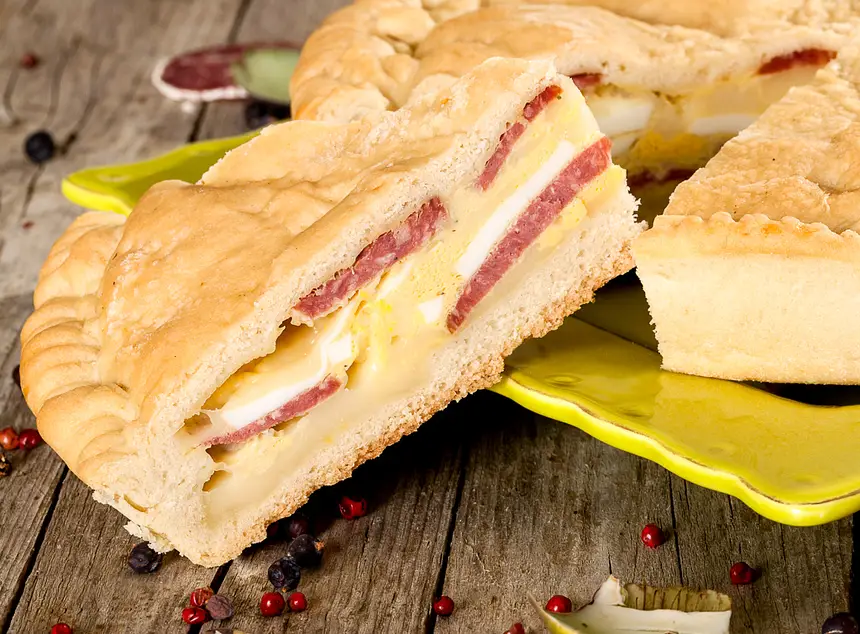
Easter Pie (pizza piena)


In central Italy, from Umbria to Marches, the Easter Pie is more of a bread than a pie and is known as "torta di pasqua" or "pizza di pasqua.
Cheesy Vegetable Spread
Curried cheese spread with farmer's cheese, yogurt, chopped apples, carrots, pecans, and currants. A crunchy, sweet-savory appetizer for crackers or pita.

Stage Deli's Cheese Blintzes
Stage Deli's cheese blintzes wrap golden crepes around a smooth filling of farmer's cheese, cottage cheese, and cinnamon. A classic New York deli brunch dish baked until warm.
Paskha
Paskha, the traditional Russian Easter cheese dessert with cottage cheese, farmer's cheese, raspberry jam, candied orange peel, and almonds. Molded, drained, and served cold.
Paskha (Russian Cheesecake)
Paskha: the traditional Russian Easter cheesecake, an unbaked pyramid of sweetened farmer's cheese studded with candied fruit, raisins, and almonds, served with a madeira-rum lemon sauce. Orthodox Easter in every bite.
Varenyky (Ukrainian Filled Dumplings)
Authentic Ukrainian varenyky with tender egg yolk dough and two classic fillings: creamy potato-cheese and tangy sauerkraut-bacon. A from-scratch dumpling recipe worth every fold.