What Is Chinese barbeque pork and How Can I Use It?
Here's everything worth knowing about chinese barbeque pork and how to pick it, what it is, how to store it, and what to use instead, plus 5 recipes to cook tonight.
Key Points
- Cantonese char siu: pork strips in a sweet-savory red glaze, roasted until lacquered and charred.
- Pork shoulder is the classic cut; marinade is hoisin, soy, honey, garlic, and five-spice.
- Roast hot around 425°F (220°C), basting often so the sugar caramelizes without scorching.
- Cooked once, used all week: fried rice, noodle bowls, and steamed cha siu bao buns.
- Keeps three to four days refrigerated; freezes well up to three months in portions.
What is chinese barbeque pork?
Chinese barbecue pork, known as char siu (cha siu), is strips of pork marinated in a sweet-salty red glaze and roasted until the edges char and the surface turns sticky and lacquered.
The name means "fork roasted," from the old method of hanging the meat over a fire on long forks.
You see it hanging in Cantonese roast-meat shop windows, sliced over rice and noodles or chopped into buns. The classic glaze is sweet up front with a savory backbone, and that reddish color is the signature.
How to Make Char Siu
Pork shoulder is the usual cut. Its fat keeps the meat juicy through a hot roast.
Pork belly and boneless loin both work too, belly for richer slices and loin for leaner ones.
The marinade is the whole game. It leans on hoisin, soy sauce, honey or sugar, garlic, five-spice powder, and a splash of Shaoxing wine. A little red fermented bean curd or a touch of red food coloring gives the trademark hue.
Marinate at least a few hours, ideally overnight. Roast at around 425°F (220°C), turning and basting with the marinade and a little extra honey so the surface caramelizes into that glossy, slightly burnt-edged crust.
The meat is done at 160°F (71°C) for shoulder. Rest it, then slice across the grain into thin pieces.
Cooking With Char Siu
Char siu is built to be cooked once and used all week. Slice or dice it cold and it drops straight into a stir-fry, soup, or pot of rice with no more work.
It is the pork in Shrimp & Barbecued Pork Fried Rice and Chinese: Shrimp Fried Rice, diced small and tossed in at the end so it just warms through.
In noodle dishes like Chinese: Noodles & Gravy (Yee Mein) and Spicy Egg Noodles (Bamee Haeng), it is sliced thin and laid over the top.
The most famous use is the filling for Chinese: Barbecued Pork Bun (Cha Siu Bow), where chopped char siu is bound in a sweet, thick sauce and steamed inside a fluffy white bun.
It pairs with steamed rice, egg noodles, scallions, ginger, cucumber, and a swipe of hot mustard or chili oil. The usual mistake is roasting it dry: char siu wants frequent basting and a glaze finish, or the sugar scorches before the inside is done.
Substitutes
No substitute matches the sweet-savory lacquer, but several get you close. Store-bought char siu from a Chinese deli is the obvious shortcut and often better than homemade for a quick meal.
For a dish that just needs cooked, seasoned pork, leftover roast pork tossed with a little hoisin and honey stands in well.
Chinese roast pork (siu yuk), the crispy-skin version, brings different texture but the same roast-meat-shop flavor. Teriyaki pork or smoky pulled pork can fill a fried rice in a pinch, though both miss the five-spice edge.
Buying and Storing
If you buy it ready-made, look for pieces with dark, caramelized edges and a moist, not dried-out, surface. Get it from a busy roast-meat counter where turnover is high and ask for it freshly sliced.
Store cooked char siu in the fridge for three to four days in a sealed container. It freezes well for up to three months, so it is worth roasting a big batch and freezing it in meal-size portions.
Reheat gently. A quick steam or a covered minute in the microwave keeps it tender, while a dry blast in a hot oven turns it leathery.
Quick facts
- In Chinese
- 中国烧烤猪肉
- British (UK) term
- Chinese barbeque pork
- en français
- chinois de porc barbecue
- en español
- cerdo barbacoa chino
Recipes using chinese barbeque pork
There are 5 recipes that contain this ingredient.
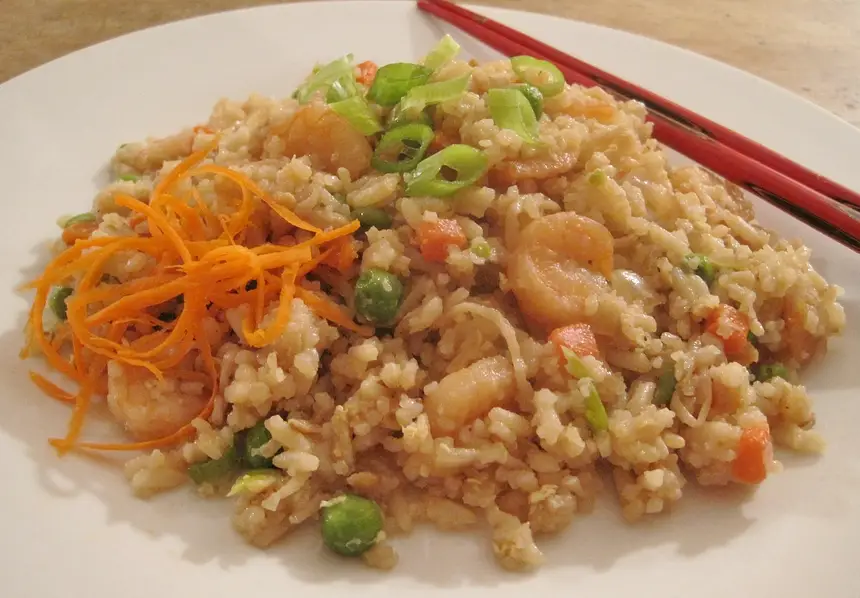
Chinese: Shrimp Fried Rice


I prepared this sans the pork as I had none. I added frozen peas, some fresh diced carrot and rinsed and drained bean sprouts. YUM!

Shrimp & Barbecued Pork Fried Rice
Cantonese-style fried rice loaded with shrimp, char siu pork, chicken, peas, and eggs. Seasoned with soy sauce, oyster sauce, and optional shrimp paste for serious wok flavor.

Spicy Egg Noodles (Bamee Haeng)
Serve this dish for breakfast, lunch or as a snack or as a side dish in a Western- style meal.

Chinese: Barbecued Pork Bun (Cha Siu Bow)
Chinese BBQ pork buns (cha siu bao): pillowy steamed white buns stuffed with diced char siu in a glossy oyster-hoisin-soy glaze. Classic Cantonese dim sum at home.
Chinese: Noodles & Gravy (Yee Mein)
Golden egg noodles stir-fried with Chinese BBQ pork, bok choy, and mushrooms in savory oyster sauce gravy. This classic Cantonese comfort food is ready in 50 minutes.