What Is Buttercup squash and How Can I Use It?
Buttercup squash rewards a little know-how: how to choose it, cook it, store it, and substitute in a pinch. Browse 4 recipes to cook with it.
Key Points
- Turban-shaped winter squash with sweet, dense, dry flesh tasting close to sweet potato.
- A kabocha cousin; roast cut side down at 400°F (200°C), then mash or puree.
- Kabocha is the closest swap; do not confuse it with tan, bottle-shaped butternut.
What is buttercup squash?
Buttercup squash is a sweet winter squash shaped like a small green turban, with a raised button or cup on the blossom end that gives it its name. The flesh is deep orange and dense and notably dry, with a flavor close to sweet potato.
It is a member of the same group as kabocha squash and shares that fluffy, low-moisture texture. Do not confuse it with butternut squash, which is tan and bottle-shaped; buttercup is squatter and greener and drier inside.
Cooking With Buttercup
The dry flesh roasts and mashes beautifully and does not need much help. Halve it, scoop the seeds, then roast cut side down at 400°F (200°C) until tender.
Mash it with butter, or finish with maple and a little brown sugar as in Maple Cranberry Buttercup Squash and Easy Buttercup Squash.
It also blends into soups and stews, holding its shape in chunks better than a wetter squash, as in Vegan Squash Soup. The thick rind is usually left behind: scoop the cooked flesh from the shell.
Kabocha squash is the closest swap, with the same sweet dry flesh and edible skin. Butternut squash works too, though it runs moister and milder.
Quick facts
- In Chinese
- 毛茛南瓜
- British (UK) term
- Buttercup squash
- en français
- courge Buttercup
- en español
- calabaza botón de oro
Recipes using buttercup squash
There are 4 recipes that contain this ingredient.
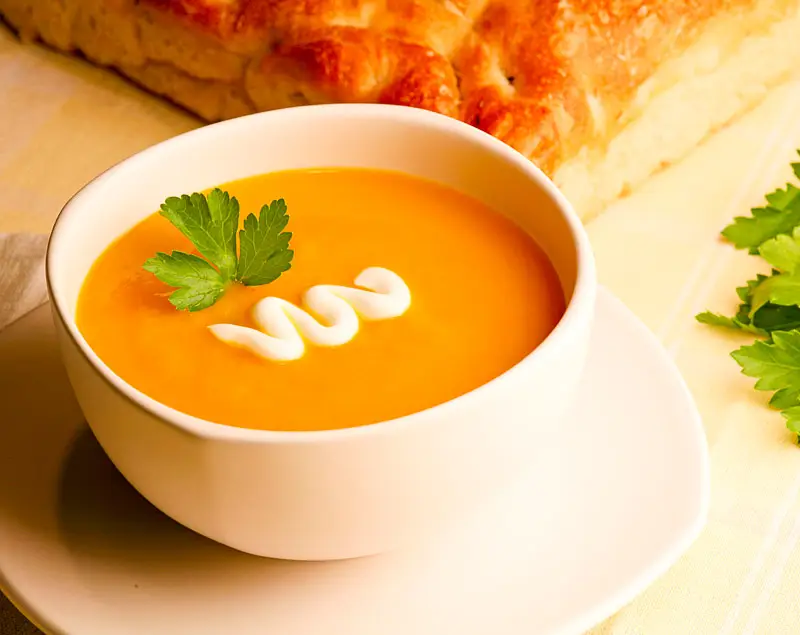
Vegan Squash Soup


Vegan squash soup blends sweet buttercup squash with apple, onion, and fresh ginger into a silky, dairy-free bowl. No cream needed; the squash and apple do all the work. A cozy, healthy fall starter.
Gardiniere
Italian giardiniera pickled vegetables with red peppers, cauliflower, wax beans, squash, radish, carrots, and onion in a basil-garlic brine. Water-bath canned for long pantry storage.
Easy Buttercup Squash
Buttercup squash is one of the sweetest varieties of winter squash, and its seeds make a great snack, just like pumpkin seeds.

Maple Cranberry Buttercup Squash

This showy make-ahead buttercup squash recipe is impressively divine. Maple-infused cranberries top maple butter-flavored squash baked-on apple slices.