What Is Bread, mulitgrain and How Can I Use It?
If bread, mulitgrain has turned up in a recipe or caught your eye at the store, here's what you need to use it with confidence and how to choose it, cook it, store it, what to substitute, and 6 recipes to try it in.
Key Points
- Multigrain bread blends several grains and seeds for a nutty flavor and chewy crumb.
- The label promises a grain mix, not whole grain; read the ingredient list for fiber.
- Its sturdy crumb suits loaded sandwiches and toast that would soak through white bread.
- Whole wheat or seeded sourdough swaps in one for one when you are out.
- Store it at room temperature for a few days or freeze slices; never refrigerate bread.
What is bread, mulitgrain?
Multigrain bread is any loaf made with more than one type of grain, usually a blend of wheat with oats, barley, millet, rye, or seeds like flax and sunflower.
The grains may be left whole or cracked, or milled into flour, which gives the bread a nutty flavor and a chewier, more textured crumb than plain white.
The label can be misleading. "Multigrain" only promises a mix of grains, not that they are whole, so a loaf can be multigrain and still be built mostly on refined white flour. For real fiber, read the label for whole grains listed first.
At its best it is a hearty sandwich bread, substantial and faintly sweet, packed with visible seeds and grain.
How to Use Multigrain
Its main job is the sandwich, where its sturdy crumb holds up to wet fillings better than soft white bread. An Egg Salad & Green Bean Sandwich and a Healthy Veggie Sandwich both lean on multigrain for structure under a moist, loaded filling.
It is just as good toasted, where the grains and seeds turn aromatic. A Tomato & Ham Breakfast Melt and Cheese & Walnut Stuffed Mushrooms on Toast both use the toasted slice as a sturdy, flavorful base that will not go limp under a hot topping.
Stale slices are not waste. Cube and dry them for croutons or pulse into coarse, seedy breadcrumbs with more character than plain white crumbs.
Pairing and Common Mistakes
The nutty, slightly sweet flavor pairs naturally with sharp cheese, smoked or cured meats, avocado, honey, and nut butters. Hearty spreads and earthy fillings suit it better than delicate ones, which the grain flavor can overwhelm.
The common mistake is assuming multigrain means whole grain and healthy by default. A loaf with caramel coloring and mostly white flour looks wholesome but delivers little more fiber than white bread, so the ingredient list matters more than the name.
The second mistake is using it where you want a clean, neutral slice. For delicate tea sandwiches or a classic grilled cheese, the seeds and dense crumb of multigrain can fight the filling rather than support it.
Substitutes
Whole wheat bread is the closest everyday swap, with a similar density and nutty flavor, though it lacks the seeds and mixed-grain texture. Use it one for one in any sandwich or toast.
Whole grain or seeded sourdough is another strong stand-in, trading some sweetness for a tangy bite while keeping the hearty, chewy crumb that multigrain is known for.
Plain white or oatmeal bread works in a pinch, but expect a softer, milder slice that holds up less well to heavy, wet fillings.
Buying and Storing Multigrain
To buy the real thing, ignore the front of the package and read the ingredient list. The first ingredient should be a whole grain such as whole wheat flour, and a high-fiber loaf will list several whole grains and seeds near the top.
Fresh bakery multigrain has no preservatives, so it stales within 2 to 3 days at room temperature. Keep it in a paper or cloth bag at room temperature and use it quickly; never refrigerate bread, since the cold staling cycle dries it out faster than the counter does.
For longer storage, slice the loaf and freeze it in a sealed bag for up to 3 months. Frozen slices toast straight from the freezer, which is the easiest way to keep a seeded loaf from going stale before you finish it.
Quick facts
- In Chinese
- 面包,mulitgrain
- British (UK) term
- Bread, mulitgrain
- en français
- pain, mulitgrain
- en español
- pan, mulitgrain
Recipes using bread, mulitgrain
There are 6 recipes that contain this ingredient.
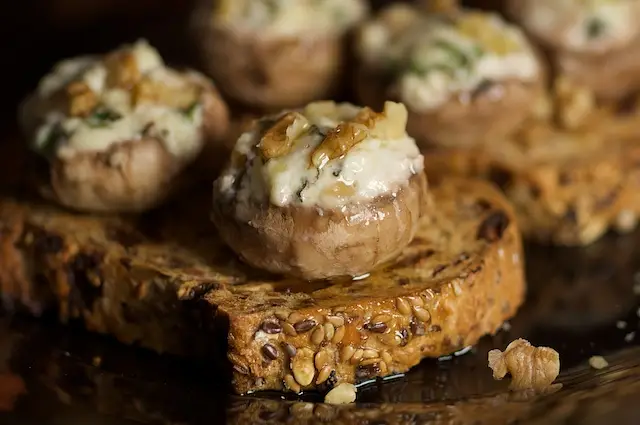
Cheese & Walnut Stuffed Mushrooms on Toast


This is a recipe I made for a food styling course from a cookbook. The assignment was to duplicate the look and feel of a recipe from a magazine or cookbook. This is a modified recipe that came from the book Healthy Appetite by Gordon Ramsay.
Healthy Veggie Sandwich
Loaded veggie sandwich on multigrain bread with mashed avocado, roasted red pepper, cucumber, tomato, cheddar, and alfalfa sprouts. No cooking required.

Cucumber Rounds
Creamy cucumber rounds with herb cream cheese on multigrain bread make the cutest finger food for tea parties, showers, and garden gatherings. Ready in just 30 minutes with 6 simple ingredients.

Egg Salad & Green Bean Sandwiches
Egg salad sandwiches with blanched green beans, Vidalia onion, celery, and honey mustard on multigrain bread. A crunchy twist on classic egg salad that adds fresh snap to every bite.
Tomato & Ham Breakfast Melt
Crispy multigrain toast loaded with thin-sliced ham, ripe tomato, and bubbly melted cheddar. This open-faced breakfast melt takes just 8 minutes from start to plate.

High-Fiber Bread Quiche
High-fiber bread quiche uses stale multigrain bread as the crust, filled with low-fat cottage cheese, eggs, and evaporated skim milk. A lighter take on classic quiche with no pastry dough required.