What Is Hubbard squash and How Can I Use It?
Hubbard squash is easier to cook with than it looks. Here's how to choose, use, and store it, what to substitute, and 3 recipes to get you started.
Key Points
- Big, hard-shelled winter squash with dense, mildly sweet, slightly dry flesh for purees.
- Roast halves cut side down at 400°F (200°C), then scrape flesh from the inedible skin.
- Purees into soup and pie; butternut and kabocha substitute and are easier to handle.
What is hubbard squash?
Hubbard squash is a big, hard-shelled winter squash, often ten pounds or more, with a bumpy teardrop shape and a blue-gray or green or orange rind. The skin is thick and inedible, so this one always gets peeled or scooped after cooking.
The flesh is dense and mildly sweet and a little dry, which makes it a workhorse for purees. Because a whole hubbard is enormous, many stores sell it in cut chunks, which is the easy way to buy it if you do not need fifteen pounds at once.
Cooking With Hubbard
The shell is too hard to peel raw with any safety, so cook it whole or in chunks first. Halve it with a cleaver and a mallet, scoop the seeds, then roast cut side down at 400°F (200°C) until a knife slides in easily.
Once it is soft, scrape the flesh from the skin. That cooked flesh purees into soups, pies, and casseroles, standing in for pumpkin or butternut squash. It shows up in Hubbard Squash Soup and Winter Squash Risotto With Radicchio.
For drier flesh, steam or roast rather than boil, since boiling waterlogs it.
Butternut squash and kabocha squash both substitute well and are far easier to handle.
Quick facts
- In Chinese
- 哈伯德壁球
- British (UK) term
- Hubbard squash
- en français
- courge Hubbard
- en español
- Hubbard calabaza
Recipes using hubbard squash
There are 3 recipes that contain this ingredient.
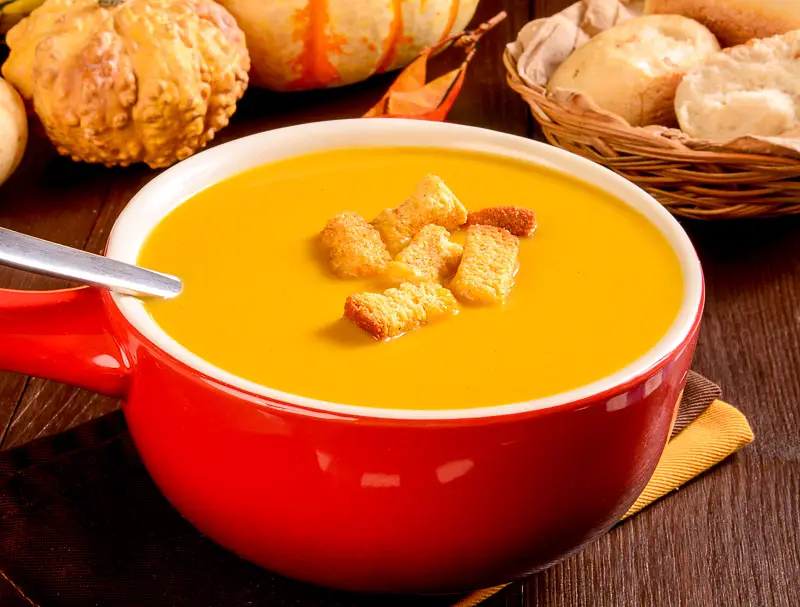
Hubbard Squash Soup


Hubbard squash soup blends roasted squash puree with garlic, vegetable stock, heavy cream, and warm hints of cinnamon and mace. A creamy, vegetarian fall soup ready in an hour.

African Squash & Yams (Futari)

Hubbard squash and yams simmer in coconut milk with cinnamon and cloves for a lightly sweetened West African side dish ready in 25 minutes.