What Is Grape seed oil and How Can I Use It?
Wondering what to do with grape seed oil? This guide covers how to pick it, cook it, store it, and swap it, plus 2 recipes to put it to work.
Key Points
- Light, near-flavorless oil pressed from grape seeds left over after winemaking.
- Fairly high smoke point near 420°F (215°C) suits both delicate dressings and high-heat sauteing.
- Neutral enough for baking, keeping cakes moist without adding an oil note.
- Swap in soy, canola, or refined sunflower oil; light olive oil works for dressings.
- High in polyunsaturated fat, so it turns faster; store cool and dark and use within months.
What is grape seed oil?
Grape seed oil is a light, clean oil pressed from the seeds left over after winemaking.
It is pale and thin, close to flavorless, with just a faint nutty edge that stays in the background.
That neutrality plus a fairly high smoke point, around 420°F (215°C), makes it a flexible all-rounder. It is light enough for a delicate vinaigrette yet sturdy enough for searing and sauteing.
Cooks reach for it when they want a clean oil that does not announce itself, whether in the dressing for an Edamame, Carrot, & Avocado Salad or as the fat in a moist cake like Super Moist Tripple Strawberry Cake.
Using Grape Seed Oil
Lean on it where you want neutral and light. Whisk it into dressings and mayonnaise, where its thin body and clean taste let herbs and acid lead, or use it for high-heat sauteing and stir-frying without smoking out the kitchen.
It works in baking too. The flavor stays out of the way, so cakes and quick breads come out moist without a competing oil note.
For a swap, any neutral oil fills in: soy oil, canola, or refined sunflower oil all match the smoke point and clean taste. Light olive oil works in dressings if you want a touch more flavor.
Grape seed oil is rich in polyunsaturated fat, so it goes rancid faster than more saturated oils. Keep it tightly capped in a cool, dark cupboard away from the stove, and use an opened bottle within a few months.
A sharp or stale smell means it has turned.
Quick facts
- In Chinese
- 葡萄籽油
- British (UK) term
- Grape seed oil
- en français
- l'huile de pépins de raisin
- en español
- aceite de semilla de uva
Recipes using grape seed oil
There are 2 recipes that contain this ingredient.
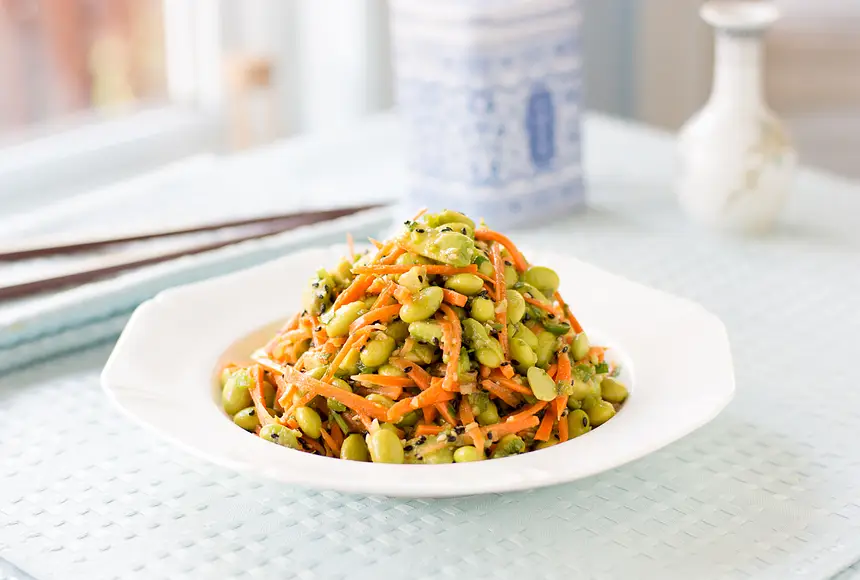
Edamame, Carrot, & Avocado Salad


Edamame, carrot, and avocado salad tossed in a bright orange-lime and ginger-sesame dressing with black sesame seeds and cilantro. A fresh, protein-rich vegan, gluten-free side.

Super Moist Tripple Strawberry Cake
Triple strawberry cake: real strawberries three ways, reduced into the batter, folded into the cream cheese frosting, and layered fresh. A moist, intensely berry layer cake with no jello or fake flavor.