What Is Egg wash and How Can I Use It?
Wondering what to do with egg wash? This guide covers how to pick it, cook it, store it, and swap it, plus 3 recipes to put it to work.
Key Points
- An egg wash is beaten egg brushed on dough to add gloss, color, and a seal before baking.
- The all-purpose mix is one whole egg beaten with about 1 tablespoon of water per egg.
- Yolk plus cream gives the darkest finish; white plus water gives shine with no extra browning.
- Brush a thin, even coat just before baking and keep it out of the seams where it sets thick.
- Beat until smooth so the white does not streak; a leftover wash keeps a day or two refrigerated.
What is egg wash?
An egg wash is a beaten egg, often loosened with a splash of water or milk, brushed onto dough before baking. It is not an ingredient you eat on its own so much as a finishing technique that controls how a crust looks and behaves in the oven.
The egg proteins brown and the sugars caramelize under heat, so a washed crust comes out glossy and deep golden where an unwashed one stays pale and matte. The same brush of egg also acts as glue.
For everything about eggs themselves, see the eggs hub. This page is about the wash and how to use it.
What an Egg Wash Does
An egg wash does three jobs. It adds gloss and color, it seals seams so filled pastries do not leak, and it makes seeds or coarse sugar stick to the surface.
The ratio is flexible. A whole egg beaten with about 1 tablespoon of water per egg is the all-purpose mix, thin enough to brush evenly without pooling.
Adjust the liquid to tune the result: water gives a crisp, lightly glossy finish, while milk or cream deepens browning and softens the sheen. A pinch of salt whisked in helps break down the egg so it brushes on smooth.
Which Part of the Egg to Use
Choose your part of the egg for the effect you want. A whole egg is the balanced default: good color, good gloss, easy to brush.
Yolk only, often with a little cream, gives the darkest, most lacquered finish. That is the deep mahogany you see on enriched breads and pie tops.
White only, beaten with a splash of water, gives a clear, crisp surface with almost no added color, which is what you want when seeds or sugar need to grip but you do not want extra browning.
Brush a thin, even coat with a pastry brush just before baking, and avoid letting it pool in the seams where it will scramble and set thick.
Where to Use It
An egg wash finishes biscuits, pie crusts, puff pastry, and enriched breads. It gives Sage Buttermilk Biscuits their burnished tops and seals the delicate shells of a classic Vol Au Vent so they puff cleanly.
It also helps a coating grip, brushed on fish or cutlets before a crumb crust so the breading holds, as in Catfish in Oyster Andouille Butter.
Mixing and Keeping It
Beat the egg and liquid until completely smooth with no stringy bits, since unbeaten white will streak and set unevenly on the crust.
A leftover wash keeps covered in the refrigerator for a day or two, but it is so quick to make that most cooks mix it fresh each time. Never reuse a wash that has touched raw meat or fish for another purpose.
Quick facts
- In Chinese
- 蛋液
- British (UK) term
- Egg wash
- en français
- dorure à l'œuf
- en español
- batido de huevo
Recipes using egg wash
There are 3 recipes that contain this ingredient.
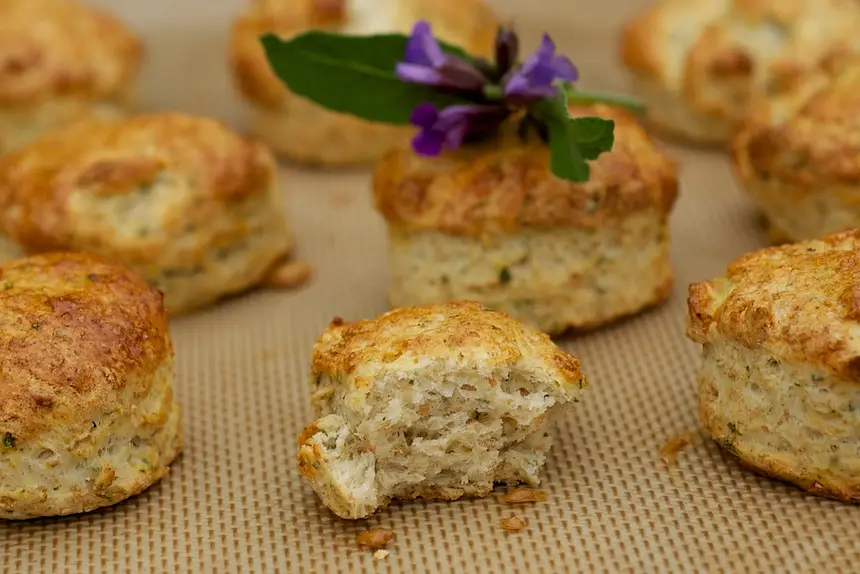
Sage Buttermilk Biscuits


Fluffy whole wheat buttermilk biscuits seasoned with sage. Tender and warm goodness that's perfect with any meal.
Catfish in Oyster Andouille Butter

Pan-fried catfish fillets topped with a Cajun butter sauce of plump oysters, smoky andouille sausage, mushrooms, and green onions. Louisiana bayou cooking on a plate.
Vol Au Vent
Homemade vol au vent shells made from puff pastry shaped around a foil ball for a hollow center. Fill with chicken, seafood, or mushroom sauce for an elegant French appetizer.