What Is Challah and How Can I Use It?
Challah is easier to cook with than it looks. Here's how to choose, use, and store it, what to substitute, and 6 recipes to get you started.
Key Points
- Braided Jewish egg bread made with oil, not butter, so it stays dairy-free and kosher with meat.
- A leaner member of the egg bread family; brioche is richer, both behave the same soaked in custard.
- Best for French toast and bread pudding a day old; cut slices a full inch (2.5 cm) thick.
- Brush a thin egg wash over the whole braid for the glossy crust, or it bakes pale and matte.
- Keeps two to three days in a paper bag, up to three months frozen; stale loaves are ideal soaked.
What is challah?
Challah is the braided, egg-enriched bread of Jewish tradition, served on the Sabbath and most holidays. Eggs and a little oil give it a golden, tender crumb with a soft, faintly sweet flavor, and a brushed egg wash bakes the plaited top to a deep, glossy brown.
It belongs to the wider family of egg bread, the same enriched-dough category as brioche and Portuguese sweet bread. But challah is its own specific thing.
It is leaner than brioche, made with oil rather than butter, which keeps it dairy-free so it can be served alongside meat under kosher rules.
The braid is part of the meaning, not just decoration. A standard loaf is a three- or six-strand plait; round, coiled loaves appear at Rosh Hashanah to symbolize the turning of the year.
How to Use Challah
Fresh challah is a table bread, torn and passed rather than sliced thin. Its tender, slightly sweet crumb is good with butter and honey, and it makes a forgiving sandwich loaf for anything not too wet.
Challah comes into its own the day after, once it has firmed up. That sturdier crumb is built for soaking, which is why it is the classic bread for French toast and bread pudding.
The Overnight French Toast with Cinnamon and Orange Zest French Toast both lean on a thick-cut slice that drinks up custard without collapsing.
Cut it thick for these dishes, around 1 inch (2.5 cm). Thin slices turn to paste in the custard, while a thick slab keeps a soft, set center under a crisp seared face.
Pairing and Common Mistakes
Challah pairs naturally with sweet and rich partners: honey, jam, cream cheese, or the smoked salmon of a brunch spread. Its own light sweetness means it does not need much, and it bridges the gap between a dinner roll and a dessert bread.
The most common mistake is using fresh, soft challah for French toast. A just-baked loaf is too moist to absorb more liquid and goes soggy through the middle. Let slices dry out uncovered overnight, or toast them lightly first.
The other slip is rushing the egg wash. A thin, even brush of beaten egg over the whole braid before baking is what gives challah its gloss; miss the seams of the plait and they bake up pale and matte.
Substitutes
Brioche is the closest swap. It is richer and more buttery, so French toast and bread pudding come out a touch heavier, but the egg-enriched crumb behaves the same in custard.
Portuguese sweet bread or a soft Hawaiian roll loaf also stands in well, bringing similar sweetness and a tender crumb. They are sweeter than challah, so cut back any added sugar in the recipe.
For everyday sandwiches or toast, plain white sandwich bread works in a pinch, but it lacks the richness and will not give the same custardy French toast. When the egg-enriched character matters, reach for another egg bread rather than a lean loaf.
Buying and Storing Challah
Look for challah at kosher bakeries and most supermarkets, especially before Friday and the High Holidays. A good loaf is deep golden and glossy on top with a defined braid and feels light for its size. Whole loaves keep better than pre-sliced.
Store challah at room temperature in a paper or cloth bag for two to three days. Like all enriched breads it stales faster than a lean loaf, so plan to eat it within a couple of days or repurpose the rest.
For longer storage, freeze. A whole loaf or thick slices wrapped tightly keep up to three months and thaw in a couple of hours on the counter. Stale challah is not waste; it is the starting point for the French toast and bread pudding it was practically made for.
Quick facts
- In Chinese
- challah的
- British (UK) term
- Challah
- en français
- challah
- en español
- jalá
Recipes using challah
There are 6 recipes that contain this ingredient.
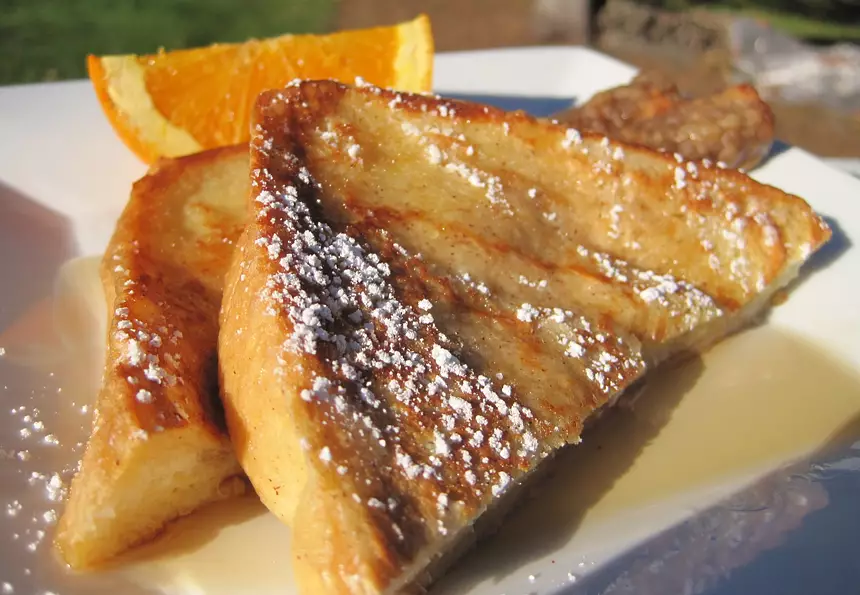
Orange Zest French Toast


Orange zest challah French toast soaked in eggs, milk, cinnamon, and fresh orange. Pan-fried in butter and oil for crisp edges and a custardy center. Brunch-worthy in 35 minutes.
Overnight French Toast with Cinnamon

Overnight French toast soaks rich challah in a cinnamon-vanilla custard so it fries up golden and custardy in the morning, no fuss. Served with a homemade cinnamon cream syrup you can make a week ahead.
Grilled Cheese Sandwich with Olivada
Grilled cheese sandwich with olivada: challah bread smeared with briny black olive paste, layered with Swiss cheese and optional tomato, grilled crisp. A Mediterranean twist on a classic.
Sinful French Toast
Indulgent challah French toast dipped in heavy cream, eggs, vanilla, and a splash of Triple Sec, then griddled golden with cinnamon. Weekend brunch that earns its name.
Delicious Challah French Toast
Challah French toast made with thick slices of egg-rich bread soaked in cream-and-cinnamon custard, then pan-fried in ghee until golden. The best French toast you can make at home.
Charlotte a L'Alsacienne
Classic Alsatian apple charlotte with milk-soaked bread, cinnamon-spiced apples, chopped almonds, and a splash of kirsch. Baked in a bundt pan until golden, this rustic French dessert is pure comfort.