Whole Wheat Indian Chapatis


Submitted by cpjp519
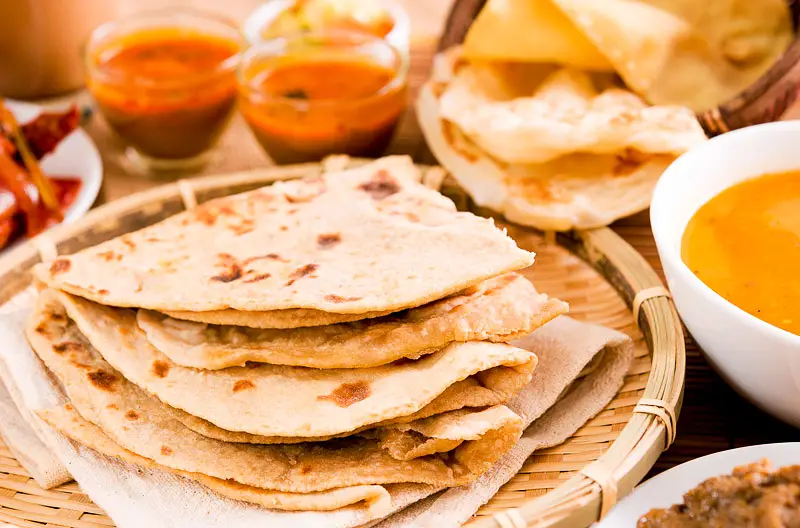
Whole wheat Indian chapatis from scratch with just three ingredients: atta flour, water, and salt. The everyday flatbread of North India, cooked on a hot griddle.
YIELD
4 servingsPREP
20 minCOOK
20 minREADY
40 minChapati is the everyday bread of North India, eaten morning, noon, and night across hundreds of millions of households. It is also one of the simplest breads in the world to make. Three ingredients, no leavening, no fat, no sugar. The skill is entirely in the technique, which is why most Indian home cooks learn it as children.
The ideal flour is atta, a finely milled durum whole wheat that produces a softer, more pliable bread than standard whole wheat flour. Atta is sold in any Indian grocery and increasingly in mainstream supermarkets. Regular whole wheat flour works in a pinch, but the chapatis come out a touch denser and chewier.
The long rest is what separates good chapatis from gummy ones. Letting the dough sit at least 30 minutes (and up to two hours) hydrates the bran and relaxes the gluten so the breads roll out paper-thin without springing back. The recipe notes that longer rests also make the bread more digestible, which is a real thing: bran softens with time and the resulting bread sits easier on the stomach.
Rolling without flipping the dough is a small detail with a big payoff. Flouring one side and leaving the other dry means each bread sticks to the griddle on the dry side and steams from the floured side, which is what creates the puff that defines a properly cooked chapati.
Chef Tips
- Knead the full 8 to 10 minutes by hand. Underkneading gives a tough, dense bread; the gluten needs to develop fully for the puff to happen.
- Cover the resting dough with a truly damp cloth, not just a dry one. Whole wheat dough dries out fast and a crusted surface fights the rolling.
- Get the cast iron griddle ripping hot before the first chapati lands. A cold pan and the bread cooks slow, dries out, and never puffs.
- After the first side cooks, flip and press gently with a folded towel or the back of a spoon to encourage puffing. The steam trapped between layers is what lifts the bread into a balloon.
Variations
- Brush each finished chapati with melted ghee for a richer, glossier finish (this is how they are often served in restaurants).
- Mix in a tablespoon of olive oil with the water for a softer dough that stays pliable longer (a lazy weeknight cheat).
- Sprinkle a teaspoon of crushed ajwain or kalonji seeds into the flour for an aromatic seeded variation.
Ingredients
Directions
You will need a medium-sized bowl, a rolling pin, a castiron griddle or heavy skillet, and a small cotton cloth or a paper towel.
In a medium-sized bowl, mix together the salt and the flour.
Make a well in the middle and add just less than 1 cup warm water.
Mix with your hand or with a spoon until you can gather it together into a dough (depending on the condition of your flour, you may need a little extra water or a little extra flour to make a kneadable dough).
Turn out onto a lightly floured bread board and knead for 8 to 10 minutes.
Cover with a damp cloth or a plastic wrap and let stand for 30 minutes or for up to 2 hours.
The longer the dough stands, the more digestible the breads.
Divide the dough into 8 pieces and flatten each with lightly floured fingers.
Continue flattening with a rolling pin until each piece is 8 inches in diameter.
Once you have started rolling, roll out each bread without flipping it over.
To keep the bread from sticking to your bread board, make sure that the bread is lightly floured underneath.
Cover the breads with the damp towel or plastic wrap as you roll out others (make sure not to stack the rolled out breads; if you don’t have enough counter space for the breads, roll out just a few and begin cooking, rolling out the others as the breads cook.

Comments