What Is Pasta, whole-wheat macaroni and How Can I Use It?
Wondering what to do with pasta, whole-wheat macaroni? This guide covers how to pick it, cook it, store it, and swap it, plus 5 recipes to put it to work.

Key Points
- Whole-wheat macaroni is the elbow shape made from whole durum wheat, nuttier and firmer than plain.
- The shape is unchanged; the whole grain changes flavor and bite, plus adds fiber from the bran.
- Cook it a minute or two longer than plain elbows and taste early for the right bite.
- It is built for mac and cheese and hearty soups, where a bold sauce matches the grain.
- Add a little more sauce in a casserole; the firmer pieces need more liquid to bake through.
What is pasta, whole-wheat macaroni?
Whole-wheat macaroni is the small curved elbow shape made from whole durum wheat instead of refined flour. It is the same tube of pasta you reach for in mac and cheese, only tan and nuttier, with more fiber from the bran left in the grain.
The shape is unchanged: a short hollow elbow that scoops up sauce and bakes into a casserole well. What the whole grain changes is flavor and bite, not the form.
Expect a firmer chew and an earthy, slightly nutty taste that stands up to bold and cheesy dishes better than plain elbows do.
How to Use It
Boil it in well salted water like any pasta, but give it a minute or two beyond the plain-macaroni time; the bran slows the water from softening the starch. Taste a piece early, since whole wheat firms to soft over a short window.
Its home is mac and cheese, where the elbow holds a clinging sauce and the nutty grain reads as a feature rather than a compromise. A Three Cheese Broccoli Mac & Cheese is a natural fit, with enough cheese and broccoli to match the heartier noodle.
It also earns a place in soups and stews, where the sturdy tube holds shape in liquid, as in this Italian Bean Soup.
Pairing It Right
Whole-wheat macaroni wants partners with body. Sharp aged cheese, browned butter, beans, and robustly seasoned broths all stand up to the grain, while a thin, delicate sauce gets run over by the wheat flavor.
A baked Alpine macaroni like L'Aelplermagronen De Suisse Centrale, built on cheese and cream and fried onions, is exactly the kind of rich dish the whole grain can carry.
The mistake to avoid is underbaking a casserole made with it. The firmer pieces need a little more time and liquid to soften through, so add a splash more sauce than you would with plain elbows and bake until tender.
Substitutes
Plain elbow macaroni is the obvious swap; it cooks faster and tastes milder, so use a touch less liquid. Any small whole-wheat shape, such as whole-wheat shells or penne, trades in directly and keeps the same nutty character.
For more fiber from a different grain, chickpea or lentil elbows work, though they soften faster and break more easily, so undercook them. White whole-wheat macaroni is a gentler middle ground when full whole wheat tastes too strong.
Buying and Storing
Look for "whole wheat" or "whole durum" as the first ingredient; a box that leads with "wheat flour" is mostly refined. Dried whole-wheat macaroni keeps about a year in a sealed container in a cool, dry cupboard, a little less than refined pasta because the germ oil can eventually turn.
If it smells faintly of old nuts or paint, the oil has gone off and it is past its best. Cooked whole-wheat macaroni keeps three or four days in the fridge and reheats well with a splash of milk or the reserved cooking water.
Quick facts
- In Chinese
- 面食,全麦通心粉
- British (UK) term
- Pasta, whole-wheat macaroni
- en français
- pâtes, des macaronis de blé entier
- en español
- pasta, macarrones de trigo integral
Recipes using pasta, whole-wheat macaroni
There are 5 recipes that contain this ingredient.
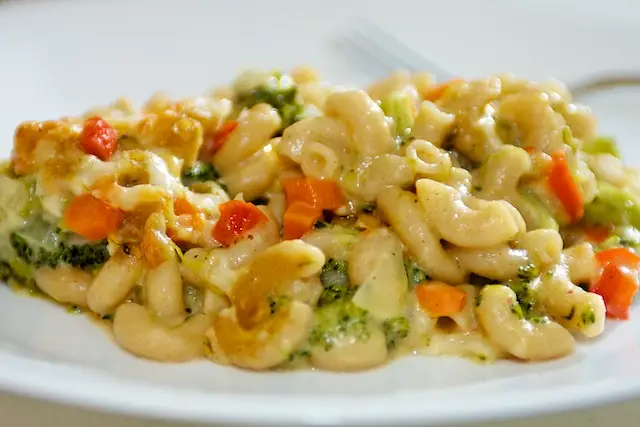
Three Cheese Broccoli Mac & Cheese


Who doesn't like mac and cheese? Three kinds of cheese make it absolutely cheesy and delicious. Packed with veggies including broccoli, carrots and bell pepper enveloped in cheese sauce so even the pickiest eater will eat their vegetables!
Hearty Stew
Vegan hearty stew with dried chickpeas and kidney beans simmered in a curry-soy broth, thickened with pureed parsnips, and loaded with carrots, zucchini, bulgur, pasta, and spinach.

L'Aelplermagronen De Suisse Centrale
Aelplermagronen, a traditional Swiss Alpine macaroni and potato dish with melted cheese, milk, and caramelized onions. Simple, hearty mountain comfort food ready in 20 minutes.
Baked Creamy Leftover Turkey, Macaroni & Mushrooms

Use some of leftover turkeys to make this creamy and tasty macaroni, which will definitely impress your family!
Italian Bean Soup
Hearty Italian bean soup with dried navy beans, tomato sauce, basil, oregano, and whole wheat macaroni. A filling, budget-friendly one-pot meal that's naturally vegan.