What Is Brown bean sauce and How Can I Use It?
Brown bean sauce rewards a little know-how: how to choose it, cook it, store it, and substitute in a pinch. Browse 13 recipes to cook with it.
Key Points
- Salty, savory Chinese paste of fermented yellow soybeans; sold whole-bean or ground.
- Bloom a spoonful in hot oil with garlic and ginger before adding meat and vegetables.
- It is intensely salty, so cut other salt and balance with a pinch of sugar.
- Earthier and less sweet than hoisin, milder than pungent black bean sauce.
- Unopened jars keep a year in the pantry; opened jars last months refrigerated.
What is brown bean sauce?
Brown bean sauce is a salty, savory Chinese paste made from fermented yellow soybeans with salt and water. Despite the name on the jar, the beans are golden soybeans, and the cooked paste turns a deep brown.
It is one of the backbone seasonings of Chinese home cooking, valued for a deep, salty-funky flavor that food writers call umami.
It comes two ways. Whole-bean versions keep the soft, fermented beans visible in a thick liquid, while ground versions are mashed into a smooth paste. Both season the same dishes; the whole-bean kind just adds a little texture.
Think of it as a stronger, less sweet relative of hoisin. Where hoisin is sweet and glossy, brown bean sauce is salty and earthy, doing the savory work in a stir-fry rather than the glazing.
How to Use It
Brown bean sauce is a cooking sauce, not a table condiment. It needs heat to bloom, so the first move in most dishes is to fry a spoonful in hot oil with garlic and ginger for a few seconds until it smells fragrant, then add your protein and vegetables.
It is the savory base in Beef & Broccoli with Garlic Sauce and a natural partner for tofu, carrying Vegetarian Ma Po Tofu with its salty depth.
Its most famous role is zhajiang noodles, the Beijing dish of thick noodles under a dark, meaty bean-sauce topping. You can taste exactly that in Peking Style Noodles with Bean Sauce & Mixed Garnish. It also flavors marinades and roasts, from Barbecued Pork Strips to Cantonese Roast Duck.
A little goes a long way. The sauce is intensely salty, so start with a tablespoon for a dish that serves four and adjust from there.
Cooking and Pairing
Because the sauce is already very salty, the cardinal rule is to cut back on other salt. Hold the soy sauce and added salt until you have tasted, or the dish turns inedibly salty.
A pinch of sugar in the pan balances the saltiness and rounds the edge, which is why so many recipes pair it with a little sugar or hoisin.
It loves fatty and mild partners that soak up its flavor: pork, duck, tofu, eggplant, and noodles. A splash of Shaoxing wine deglazes the fried paste and lifts the aroma.
The common mistake is adding it raw and cold at the end. Stirred in off the heat, it tastes harsh and one-dimensionally salty; fried at the start, it goes mellow and rounded. Always give it that few-seconds bloom in oil.
How It Differs From Other Bean Sauces
These sauces are easy to confuse on the shelf, and they are not interchangeable.
Hoisin is sweet and thick, made with fermented soybean plus sugar and spices, and works as a glaze or dip. Sweet bean sauce (tianmianjiang) is actually made mostly from wheat flour rather than soybeans. It is sweeter and smoother, the traditional choice for Peking duck wraps.
Black bean sauce is a different bean entirely: fermented and salted black soybeans, pungent and aromatic, common in Cantonese cooking. Brown bean sauce sits between them, saltier than hoisin and earthier than black bean, without much sweetness of its own.
Substitutes
Out of brown bean sauce? Hoisin is the easiest swap, but cut any added sugar and dial back the salt, since hoisin is sweeter.
Japanese red or brown miso thinned with a little water gives a similar fermented-soybean depth, though it is milder and less salty, so use a bit more.
Korean doenjang works too and is closer in funk, just stronger. In a pinch, a mix of soy sauce and a little miso or mashed canned soybeans covers the basic salty-savory note for a stir-fry, even if it lacks the depth.
Buying and Storage
Look for brown bean sauce, yellow bean sauce, or "ground bean sauce" in the Chinese section; they are the same family. Jars list soybeans, water, salt, and often wheat flour. Choose whole-bean for texture, ground for a smooth finish.
An unopened jar keeps in the pantry for a year or more thanks to the salt and fermentation.
Once opened, store it in the fridge, where it lasts six months to a year, since the high salt makes it very stable. Spoon with a clean utensil each time and keep the surface wiped down.
A little darkening on top is normal, but toss it if you see mold or smell anything sour beyond its usual funk.
Quick facts
- In Chinese
- 棕色豆瓣酱
- British (UK) term
- Brown bean sauce
- en français
- sauce aux haricots bruns
- en español
- salsa de frijol marrón
Recipes using brown bean sauce
There are 13 recipes that contain this ingredient.
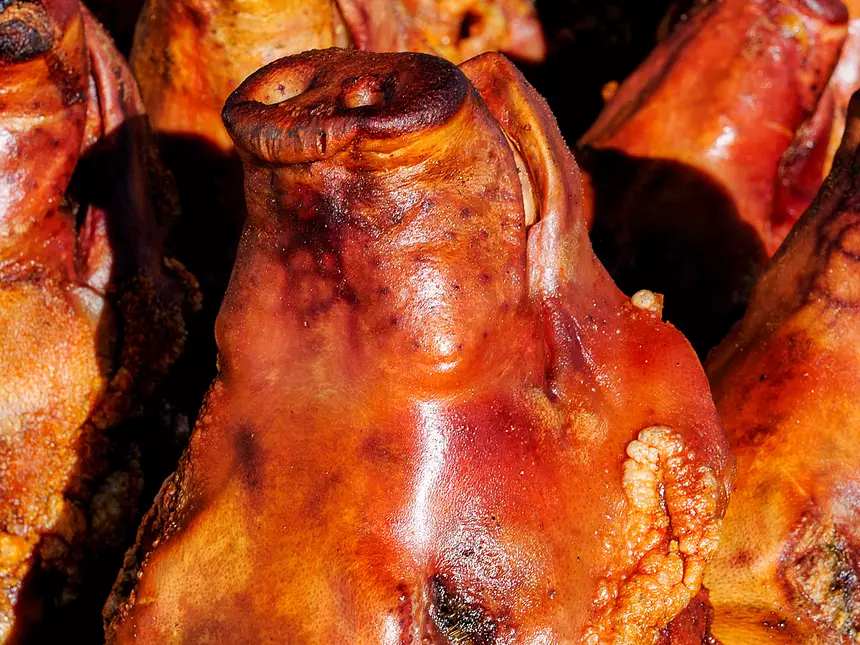
Crisp Roasted Pig's Head


Crisp roasted pig's head, Chinese-style: rubbed with five-spice, brown bean sauce and bourbon, then slow-roasted and basted with honey until the skin lacquers into shattering crackling.
Barbecued Pork Strips
Chinese-style char siu pork strips marinated in soy sauce, hoisin, five spice, rice wine, and red bean curd, then oven-roasted and glazed with honey. Serve as a main course or slice thin for appetizers.

Peking Lamb with Leeks
Peking lamb with leeks stir-fries velveted lamb in savory brown bean sauce with Shao Hsing wine, dried chilies, and Chinese mushrooms. Triple-fried for crisp edges, soft centers, and deep wok flavor.
Peking Style Noodles with Bean Sauce & Mixed Garnish
Peking Style Noodles with Bean Sauce and Mixed Garnish recipe

Lone Dao Jiow
Lon Tao Jiao: a Thai coconut milk and fermented bean sauce dip served with raw cucumber, cabbage, and green beans. A salty-sweet-sour Thai vegetable platter.
Lone Dao Jiow (Dao Jiow Coconut Sauce with Fr
Lone dao jiow, a Thai coconut dipping sauce with bean sauce, shallots, palm sugar, and tamarind served with fresh cucumbers, cabbage, and green beans. Salty, sour, and sweet.
Lone Dao Jiow (Dao Jiow Coconut Sauce with Fresh Vegetabl
Lone dao jiow is a Thai coconut-fermented soybean dipping sauce served warm with fresh cucumber, cabbage, and green beans. Salty, sour, sweet in every bite.
Braised Pork & Fresh Oysters in Clay Pot
Pork cubes marinated in five spice and sherry, wok-seared, then clay pot braised with brown bean sauce, dried orange peel, ginger, and fresh oysters. Cantonese surf-and-turf at its finest.
Salt-Roasted Chicken with Marinade
This is a good "guest" food. You can appear to have mastered esoteric Oriental cooking techniques without ever having actually prepared the dish before... Unless you drop the pot on the kitchen floor and set it on fire with the hot salt, it's a pretty foolproof cooking technique.

Vegetarian Ma Po Tofu
Fiery Sichuan-style ma po tofu with dried mushrooms, chili oil, brown bean sauce, and homemade Szechwan peppercorn powder. All the numbing heat, zero meat.
Cantonese Roast Duck
Cantonese roast duck rubbed with hoisin, five spice, sherry, and brown bean sauce, then slow-roasted until the skin turns lacquered and crackling. A Chinatown classic at home.
Beef & Broccoli with Garlic Sauce
Beef and Broccoli with Garlic Sauce: a classic Chinese stir-fry with velveted beef strips, blanched broccoli, brown bean sauce, garlic, ginger, and bamboo shoots. Ready in 30 minutes.

Dim Sum (Steamed Chinese Appetizers).
Homemade steamed dim sum dumplings with a seasoned ground meat filling in four flavor variations: chili garlic, brown bean, hoisin, and orange zest. A fun Chinese appetizer project that freezes well.