Roti Dough


Submitted by Deirdre
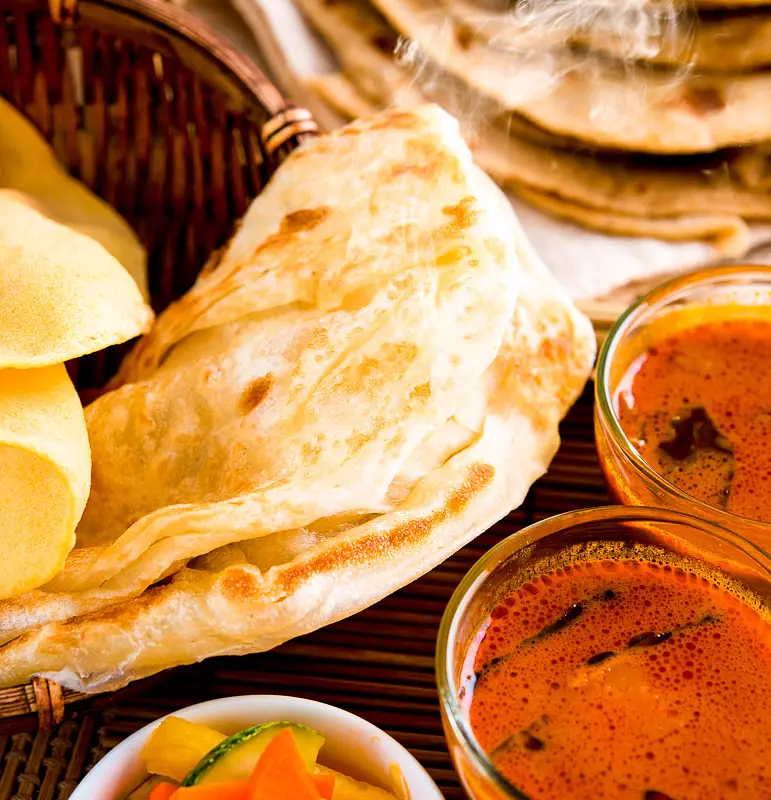
Caribbean-style roti dough with flour, milk, baking soda, and oil. Soft, supple Trinidadian-style flatbread for wrapping curries, made on a hot skillet.
YIELD
4 servingsPREP
20 minCOOK
20 minREADY
45 minRoti dough the Caribbean way, the soft, pliable flatbread used for wrapping curried chickpeas, goat, or chicken in Trinidadian and Guyanese cooking. The technique here, with the rest, the oil-spread, and the post-cook palm-pounding, is what produces the supple, flexible texture that distinguishes a real roti from a stiff chapati.
The two-step roll is essential. Roll the dough thin, brush with oil, ball it back up, rest, and roll again. That oiled fold creates layers (think of a much-simplified croissant) that puff slightly during cooking and give the finished roti its characteristic flexibility. Skip the rest and the dough fights you on the second roll.
The palm-pound at the end might sound unusual but it’s traditional and it works. Slapping the hot roti between your palms cracks the surface slightly and softens the bread so it bends without tearing. This is the difference between a roti you can wrap around curry and one that splits and leaks.
Pro Tips
- Use milk (not water) for a softer, more tender roti.
- The pan must be hot enough that water sizzles on contact; a cool pan steams the dough into a tough flat thing.
- Brush oil on the second side as it cooks for golden brown spots and supple texture.
- Stack finished rotis under a clean towel to keep them warm and pliable.
Variations
- Add 2 tablespoons of ghee instead of vegetable oil for deeper flavor.
- Use whole wheat for half the flour for a more North Indian style.
- Stuff with mashed cooked yellow split peas before the second roll for traditional dhalpuri.
Ingredients
Directions
Sift together the flour, baking soda, and salt into a bowl.
Add enough to form a stiff dough. Knead the dough well on a lightly floured board, form into 4 or more equal-sized balls.
Roll out the dough thinly to form 8 to 12 inch circles.
Then brush on a thin coating of vegetable oil.
Roll into balls again, cover, and allow to stand for 15 minutes at room temperature.
Roll out the dough again and flatten to the original dimensions by patting lightly.
Heat a cast-iron or heavy-bottomed frying pan so that when tested with a drop of water, it sizzles.
Place the rotis, one at a time, in the pan and cook for a minute.
Turn, and spread a thin layer of vegetable oil on the face of each roti, and turn frequently until cooked- when brown flecks appear on the surface.
Remove from frying pan and pound between the palms of the until it becomes supple.
Keep rotis warm and moist by covering with a towel.

Comments