Pad Thai Stir-Fried Rice Ribbon Noodles


Submitted by brocha
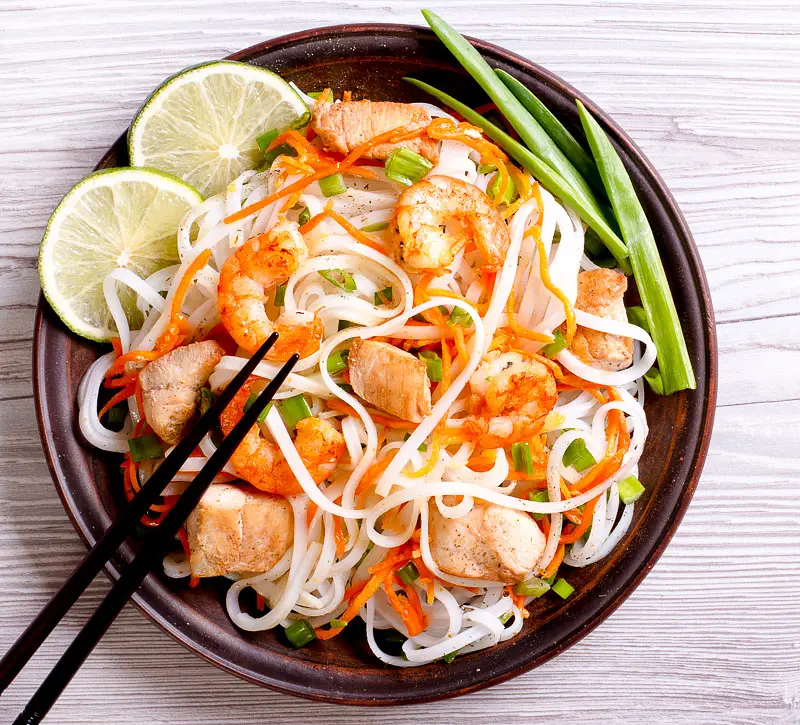
Authentic Pad Thai with shrimp, chicken, and rice ribbon noodles in a dry-coat sauce of yellow bean, fish sauce, and tomato paste. Finished with peanuts, bean sprouts, lime, and cilantro the way a Bangkok street stall would.
YIELD
4 servingsPREP
40 minCOOK
10 minREADY
50 minThis Pad Thai stays close to the Bangkok street stall version: a dry-coated noodle stir-fry rather than the gloopy, sweet, ketchup-orange Pad Thai that took over American Thai menus. The sauce is built on yellow bean sauce, fish sauce, tomato paste, vinegar, and just two tablespoons of sugar, balanced enough that you taste the noodles and the wok hei rather than a syrupy coating.
The technique that separates good Pad Thai from great is breaking each egg directly into the hot sauce one at a time. The egg sets into tiny lacy flecks throughout the noodles, instead of a scrambled lump on the side. This is exactly how you see vendors in Bangkok do it.
Use Chantaboon-style flat rice sticks if you can find them. They’re labeled in Thai shops as the proper Pad Thai noodle and have the right chewiness when soaked in warm (not boiling) water.
Chef Tips
- Soak the noodles in WARM water, not boiling. Boiling makes them mushy. Warm soaking softens them just enough to finish cooking in the wok.
- Get the wok ripping hot before anything goes in. Wok hei is the smoky, charred flavor that defines real Thai stir-fry, and it only happens at high heat.
- Have everything prepped and within arm’s reach before starting. Pad Thai cooks in under 5 minutes start to finish; there is no time to chop garlic mid-cook.
- The sauce should dry-coat the noodles, not pool. If it looks wet, you used too much liquid; if dry and stiff, splash in chicken broth.
Variations
- Skip the meat and use only fried tofu and dried shrimp for a vegetarian-leaning version (or full vegetarian by skipping fish sauce too).
- Add a tablespoon of tamarind paste to the sauce for the more traditional Pad Thai sour note. The recipe uses vinegar as a substitute, but tamarind is the original.
- Sprinkle with palm sugar or brown sugar instead of white for a deeper caramel sweetness.
Ingredients
Directions
Place noodles in a bowl and cover with warm water; let soak about 15 minutes, or until soft and pliable. Drain; set aside. Set a wok over medium-high heat. When hot, add 2 tablespoons of the oil. Add shrimp and chicken; stir-fry until shrimp turns bright orange and chicken turns white, about 30 seconds. Set aside. Reheat wok over medium heat. Add the remaining oil and the garlic; brown gently (about 20 seconds). Increase heat to medium- high. Add the bean sauce, tomato paste, fish sauce, vinegar and sugar; stir until sugar dissolves. Increase heat to high. Break 1 of the eggs into the sauce; beat 3 or 4 times. Let cook until egg is slightly set but still moist, about 20 seconds. Repeat with second and third egg. There should be tiny flecks of egg peeking through. Add the optional radish, dried shrimp and tofu, the chile flakes, softened noodles and 1 handful of bean sprouts to the hot wok. Toss and lift noodles until tender and no longer stiff, about 3 or 4 minutes. Add the chicken broth 2 tablespoons at a time if noodles seem dry, the green onions and the reserved shrimp/chicken mixture; toss for 30 seconds to reheat. The sauce is not a wet sauce; it should “dry-coat” the noodles. Transfer to a platter and serve with a sprinkling of chopped peanuts, chile flakes to taste and fresh coriander leaves. Arrange remaining bean sprouts and lime wedges around noodles. Squeeze lime over noodles before eating. Serve warm or at room temperature. Note: Traditionally, Pad Thai uses dried, flat Y4-inch-wide fettuccine-like rice-flour noodles, labeled “Chantaboon rice sticks.

Comments