What Is Ronzoni acini pepe and How Can I Use It?
If ronzoni acini pepe has turned up in a recipe or caught your eye at the store, here's what you need to use it with confidence and how to choose it, cook it, store it, what to substitute, and 3 recipes to try it in.
Key Points
- Acini di pepe are peppercorn-size pasta beads; the name means peppercorns in Italian.
- The smallest pastina shape, used mainly in soup and frog eye salad.
- Cooks in 6 to 9 minutes and turns gummy fast, so taste early.
- For cold salad, rinse under cold water so the beads stay separate.
- Swap with pastina, stelline, orzo, ditalini, or pearl couscous.
What is ronzoni acini pepe?
Acini di pepe are tiny round beads of dried semolina pasta, each about the size of a peppercorn. The name means "peppercorns" in Italian (sometimes translated as "seeds of pepper"), which is exactly what a spoonful looks like.
They are the smallest of the pastina shapes, the same family as orzo and stelline but rounder and even smaller. There is no flavor difference from any other dried pasta; the whole point of acini di pepe is the size.
How to Use Acini di Pepe
These cook fast, usually 6 to 9 minutes, and they earn their keep in two places: soup and salad.
In a brothy soup they behave like little dumplings that you can chase with a spoon. Italian wedding soup is the classic, and they slip easily into almost any vegetable broth where a tiny pasta gives body without taking over.
The other famous use is American: frog eye salad, a sweet church-potluck dish where the cooked beads are folded into whipped topping, pineapple, and marshmallows. The cooked acini stay distinct and bouncy, which is exactly why they got the "frog eye" nickname.
The well-reviewed Quick & Easy Frog's Eye Salad is a good place to start, and Glorified Pasta Salad (Frogs Eye Salad) is a fuller version.
Cooking Notes and Pitfalls
For a cold salad, cook the acini in plenty of salted water, then drain and rinse under cold water right away. Rinsing washes off surface starch so the beads stay separate instead of fusing into a paste as they cool.
This is the one time rinsing pasta is the right move.
The biggest mistake is overcooking. Because the beads are so small, a minute too long takes them from tender to gummy, and there is no fixing mushy acini. Start tasting at 6 minutes.
If you cook them directly in soup, they soak up broth fast and keep swelling. For soup you plan to reheat, cook them separately and add them to each bowl.
What to Substitute
The closest swaps are other tiny pastas: pastina, stelline (little stars), or fregola. All ride a spoon the same way.
orzo and ditalini are a little larger but work in soup and salad without much change. Israeli (pearl) couscous is the nearest match in a salad, since it is round and chewy too, though slightly bigger.
For frog eye salad specifically, stay with a tiny shape. Long pasta or large macaroni throws off the texture the dish is built around.
Buying and Storage
Acini di pepe sits in the regular pasta aisle, often near the soup pastas, under brand names like Ronzoni or store labels. The box may also read "pastina" or list both names.
Dried, it keeps about two years in a sealed container in a cool, dark cupboard. After opening, pour it into a jar so the small beads do not spill or go stale, and discard the box if you ever see pantry-moth webbing.
Cooked acini holds three to four days refrigerated but keeps absorbing whatever liquid surrounds it, so soup leftovers thicken and salad can dry out. Add a splash of broth or dressing when you serve the next day.
For general boiling and timing basics, see the main pasta guide.
Quick facts
- In Chinese
- ronzoni腺泡佩佩
- British (UK) term
- Ronzoni acini pepe
- en français
- Ronzoni pepe acini
- en español
- Ronzoni pepe acinos
Recipes using ronzoni acini pepe
There are 3 recipes that contain this ingredient.
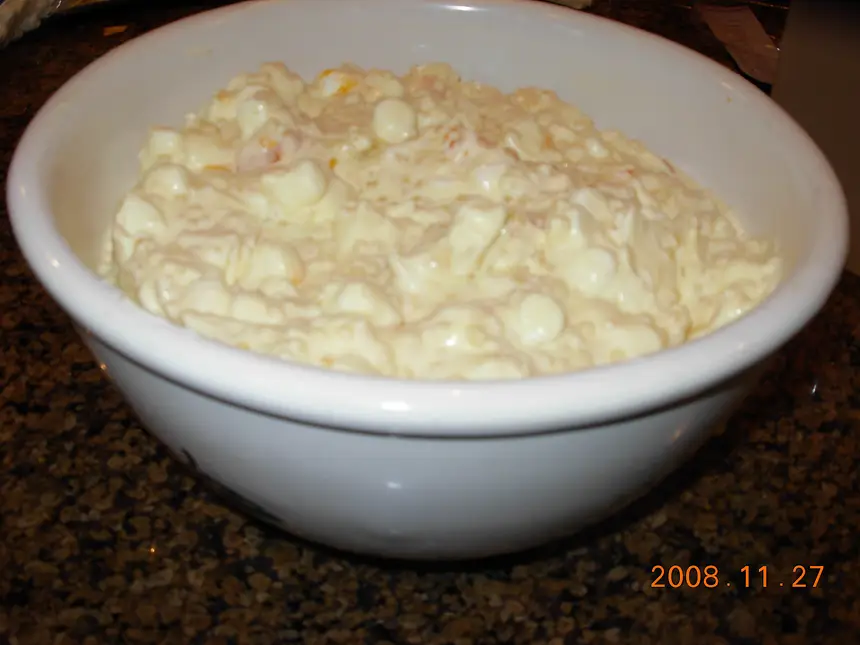
Quick & Easy Frog's Eye Salad


A delicious kind of salad made with mandarin oranges, pineapple chunks, flaked coconut and whipped topping.


Frog Eye Salad

Frog Eye Salad with tiny acini di pepe pasta in a cooked pineapple custard, folded with mandarin oranges, marshmallows, and whipped topping. A classic potluck dessert salad.