What Are Quail eggs and How Can I Use Them?
Wondering what to do with quail eggs? This guide covers how to pick them, cook them, store them, and swap them, plus 3 recipes to put them to work.

Key Points
- Quail eggs weigh about 9 grams each; roughly 5 of them equal one large chicken egg by volume.
- Hard-cook them in simmering water for just 3 to 4 minutes, then cool in ice water.
- The tough inner membrane makes peeling fiddly; roll, crack all over, and peel under cold water.
- Crack raw quail eggs with a serrated knife or scissors, since the flexible shell resists a clean break.
- Refrigerate in the carton and use within 2 to 3 weeks; the thin shells crack easily.
What are quail eggs?
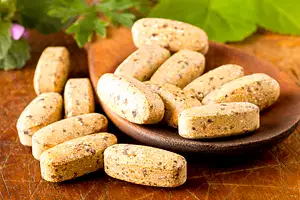
Quail eggs are the tiny, speckled eggs of the quail, about the size of a large olive and weighing roughly 9 grams each. Their shells are cream-colored with brown blotches, and the membrane underneath is surprisingly tough for something so small.
By volume it takes about 5 quail eggs to equal one large chicken egg. That is the number to remember when you want to swap them into a recipe.
The flavor is close to a chicken egg but a touch richer, since the yolk makes up a larger share of the whole. For general egg handling, see the eggs hub. This page covers what is different about cooking the small ones.
Cooking Quail Eggs
The main thing quail eggs ask for is a gentle touch and short timing, because they are so small. To hard-cook them, lower them into simmering water for about 3 to 4 minutes, then drop them into ice water.
Peeling is the fiddly part. That tough inner membrane clings, so roll each egg gently to crack the shell all over, then peel under cold running water starting at the wide end.
Cracking a raw one is harder than it looks, since the shell is flexible. Use a small serrated knife or dedicated quail-egg scissors to cut cleanly through the top rather than crushing it.
Where They Earn Their Keep
Quail eggs are mostly about presentation and bite-size charm. Halved or whole, they garnish salads, canapes, and rich soups, where their scale makes a plate feel refined.
A soft-cooked quail egg makes a delicate topping for a Sydney Salad or a floating garnish in a bowl of Horseradish Soup. Fried sunny-side up, a cluster of them tops toast or a small burger as a single tidy mouthful.
They are at their best alongside smoked fish or asparagus, anywhere a whole soft yolk is the point.
Buying and Storage
Look for quail eggs at Asian markets and farmers markets, usually sold by the dozen or more in small cartons. Choose intact shells with no cracks; the speckling pattern varies and is no sign of quality.
The shells are thin and crack easily, so store them in their carton rather than loose in a drawer. Refrigerate and use within 2 to 3 weeks.
Quick facts
- In Chinese
- 鹌鹑蛋
- British (UK) term
- Quail eggs
- en français
- oeufs de caille
- en español
- huevos de codorniz
Recipes using quail eggs
There are 3 recipes that contain this ingredient.
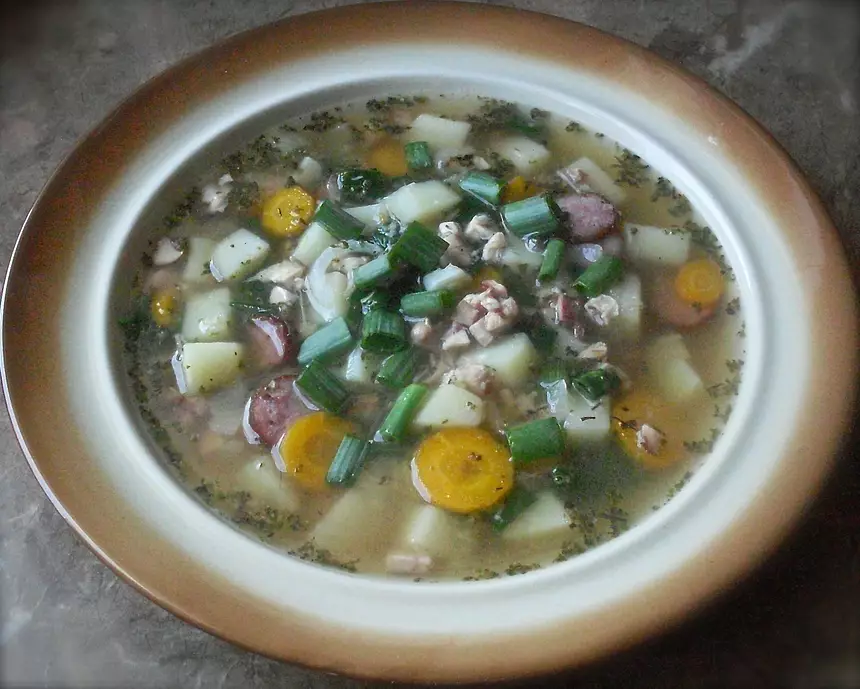
Horseradish Soup


This very old soup is traditionally cooked on Easter. The flavors of my rendition are mild, however if you like horseradish and more spicy flavor, try to add 2 times more grams than I did.

Sydney Salad
Salad made with cocktail tomatoes, avocado, rocket and proscuitto and drizzled in a strawberry dressing.