What Is Clover honey and How Can I Use It?
Here's everything worth knowing about clover honey and how to pick it, what it is, how to store it, and what to use instead, plus 8 recipes to cook tonight.
Key Points
- Mild, light-colored honey from clover blossoms; the default all-purpose honey for table and baking.
- Neutral sweetness suits dressings, bread, and glazes without a strong honey taste taking over.
- Stir it in off the heat; high heat drives off its floral aroma and can scorch.
- Swap about ¾ cup honey per 1 cup sugar and cut other liquid by a couple tablespoons.
- Never spoils sealed at room temperature; crystallizing is normal and warm water re-liquefies it.
What is clover honey?
Clover honey is honey made by bees foraging on clover blossoms, mostly white and sweet clover grown across North America. It is the default honey on most grocery shelves, the one people picture when they hear the word honey at all.
The flavor is mild and clean, gently floral, with none of the sharp or bitter notes you get from darker honeys like buckwheat. The color runs from nearly water-white to light amber depending on the season and the exact clover.
That mildness is the point. Clover honey sweetens without stamping its own character on a dish, which is why it became the standard table and baking honey.
Cooking and Baking With Clover Honey
In the kitchen clover honey is the all-purpose choice, the honey to reach for when a recipe just says "honey." Its neutral flavor keeps it out of the way where you want sweetness and a little moisture rather than a strong honey taste.
It dissolves easily into warm or room-temperature liquids, which makes it natural for a salad dressing like Lemon Cream Dressing or the sweet, tangy base of Chauvinist Pig Sauce (For Pulled Pork).
In bread it feeds the yeast and softens the crumb, the role it plays in a Seeded Multigrain Boule.
Honey browns faster than sugar because of its fructose, so baked goods made with it color sooner. Drop the oven by about 25°F (15°C) and check early to avoid an over-dark crust.
In Basel Honey-Spice Cookies (Basel Leckerli) the honey does double duty, sweetening and giving the dough its chewy set as it bakes.
Pairing and Common Mistakes
Clover honey's neutral sweetness goes almost anywhere: warm spices, citrus, tangy dairy, and mustard all suit it. It anchors a honey-mustard or barbecue glaze, sweetens plain yogurt, and rounds out the orange notes in something like Orange Spiced Fruit Bread.
The big mistake is dumping it into a hot pan or boiling tea. High heat drives off the delicate floral aromatics and can leave a faint scorched edge, so stir honey in off the heat or near the end of cooking.
Measuring is the other snag. Honey clings to the cup, so coat the measure with a thin film of oil or warm water first and it slides out clean.
When swapping honey for sugar, it is sweeter and wetter, so use about ¾ cup honey per 1 cup sugar and cut another liquid by a couple tablespoons.
Substitutes
Any other mild honey works one for one: orange blossom or alfalfa sit close in flavor. For a stronger note, a darker honey changes the character but keeps the function.
When you need a pourable liquid sweetener and have no honey, agave nectar or light corn syrup substitute well in most recipes; both are sweet and neutral, though they lack honey's faint floral lift. Maple syrup works too but brings its own distinct flavor.
Buying and Storage
Most supermarket clover honey is filtered and pasteurized for a clear, pourable jar; raw clover honey is cloudier and keeps more of its pollen and aroma. Either is fine; the choice is about clarity and how much processing you want.
Honey is one of the few foods that essentially never spoils. Stored sealed at room temperature, away from heat and moisture, it keeps for years. Refrigeration is unnecessary and actually speeds up crystallization.
Crystallizing is normal, not a sign the honey has gone bad. To return it to liquid, set the jar in a bowl of warm water (not boiling) and stir until the crystals dissolve; avoid the microwave, which overheats unevenly and dulls the flavor.
One caution: never give honey, raw or processed, to infants under 12 months because of the risk of infant botulism.
Quick facts
- In Chinese
- 三叶草蜂蜜
- British (UK) term
- Clover honey
- en français
- miel de trèfle
- en español
- trébol de miel
Recipes using clover honey
There are 8 recipes that contain this ingredient.
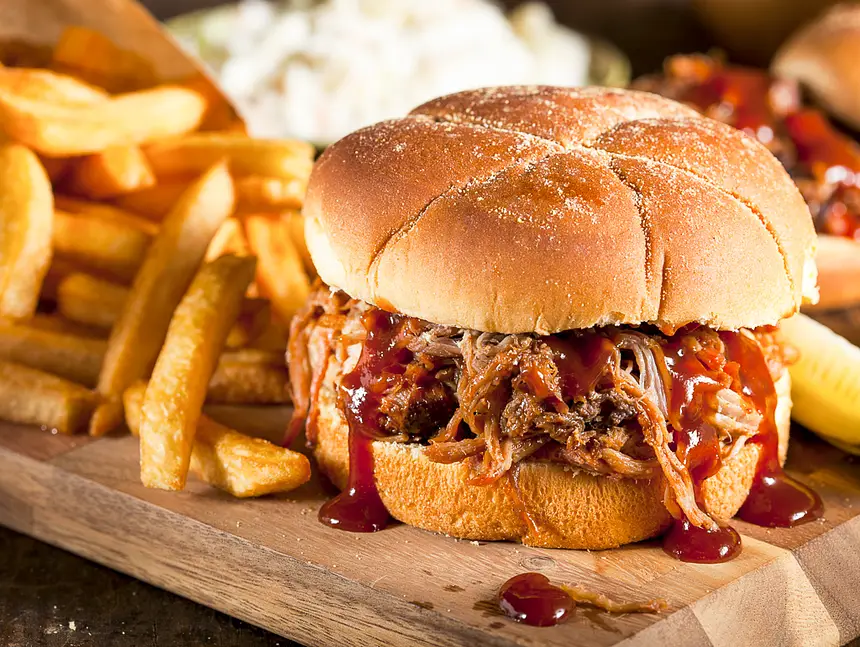
Chauvinist Pig Sauce (For Pulled Pork)


Had some leftover pulled pork and wanted something a little different than your standard barbeque sauce. Why "Chauvinist Pig"? Secret's in the sauce!

Strawberry Tropical Soup
Cold strawberry soup with sweet white wine, lime juice, honey, and frozen cherries blended smooth with cream. A chilled fruit soup served with a dollop of sour cream.
Nut Butter Pie
Frozen peanut butter ice cream pie with a chocolate wafer crust, toasted cashews, and clover honey. Top each slice with warm fudge for a no-bake dessert that hits creamy, crunchy, and chocolate-deep in one bite.
Seeded Multigrain Boule
Crusty seeded multigrain boule baked in a Dutch oven with whole wheat, oats, rice flour, flax, poppy, sesame, and sunflower seeds. No-knead, high-fiber artisan bread at home.
Orange Spiced Fruit Bread
Orange spiced fruit bread baked in a Bundt pan, packed with dried figs, golden raisins, and cranberries. A no-knead yeast loaf brushed with honey-orange syrup and finished with an optional citrus glaze.
Orange Spiced Fruit Bread
Orange spiced fruit bread baked in a Bundt pan, packed with dried figs, golden raisins, and cranberries. A no-knead yeast loaf brushed with honey-orange syrup and finished with an optional citrus glaze.
Frozen Peach Yogurt
You don’t need an ice cream maker to make this, but you do need a food processor. I use a banana and a small amount of honey to sweeten the yogurt. (See the banana-only variation on this recipe below.) You can serve it like soft-serve ice cream, or let it freeze solid so that it’s more like regular frozen yogurt.
Basel Honey-Spice Cookies (Basel Leckerli)
Traditional Swiss Basel Leckerli: honey-spice cookie bars with cinnamon, cloves, candied peels, kirsch, and almonds under a crackly sugar glaze. Makes 50 to 60 bars that keep for weeks.