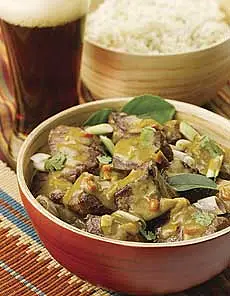
Semur Banka (Beef in Soy Sauce)


Submitted by carlao
Semur banka: Indonesian braised beef in dark soy sauce with tamarind, molasses, ginger, garlic, and nutmeg. Low and slow for 2 hours until fork-tender and saucy.
YIELD
6 servingsPREP
15 minCOOK
2 hrsREADY
2 hrsSemur is one of Indonesia’s great comfort foods, and this version delivers everything the dish is known for: deeply browned beef, a thick sweet-savory sauce, and warm spice that lingers.
Chuck steak gets seared until dark and caramelized, then braised low and slow in a sauce built from dark soy sauce, molasses, brown sugar, and tangy tamarind water. Garlic, ginger, nutmeg, and black pepper round out the flavor.
Two hours of gentle simmering transforms tough chuck into something fork-tender, with a sauce that’s glossy, rich, and clings to every piece of meat.
Serve it over steamed jasmine rice and let the sauce soak in.
Kitchen Tips
- Make the tamarind water first and let it cool while you prep everything else. Pressing the pulp through a strainer gives you a concentrated, sour liquid that balances the sweetness.
- Brown the meat in batches if needed. Crowding the wok drops the temperature and steams the beef instead of searing it.
- The sauce should be thick and reduced by the time the meat is tender. If it’s still thin, remove the lid for the last 20 minutes to let it cook down.
Ingredients
Directions
Put the tamarind into a bowl and pour boiling water over it.
Set aside until it is cooled.
Pour the contents of the bowl through a strainer into a bowl, pressing as much of the pulp through as possible.
Set the liquid aside.
Cut steak into 1 inch pieces.
Mix brown sugar, molasses, and dark soy sauce and set aside.
Heat the oil in a wok.
When it is hot, add the onions and fry, stirring occasionally, until they are soft.
Add the garlic, ginger, spices and pepper and fry for three minutes, stirring frequently.
Add the meat and increase the heat to moderately high.
Cook the meat, turning from time to time, until it is deeply and evenly browned.
Stir in the remaining ingredients, including the reserved tamarind liquid, and bring to a boil.
Reduce the heat to low, cover the pan and simmer for 2 to 2½ hours, or until the meat is cooked through and tender and the sauce is thick and rather rich in texture.
Remove from heat, transfer the mixture to a large, warmed serving platter and serve at once.

Comments