What Is White stock and How Can I Use It?
White stock is easier to cook with than it looks. Here's how to choose, use, and store it, what to substitute, and 2 recipes to get you started.
Key Points
- White stock uses raw, unroasted bones, so it stays pale and neutral in color and flavor.
- Brown stock roasts the bones first for a dark, deep, meaty result; white stock does not.
- It is the base for light dishes: veloute, cream soups, risotto, and clear consomme.
- Blanch the bones first to wash off scum so the stock stays clear, not cloudy.
- Keeps 4 to 5 days refrigerated and freezes up to 6 months, like any stock.
What is white stock?
White stock is plain stock at its most neutral. The bones go into cold water raw, never roasted, so the finished liquid stays pale and clean tasting instead of dark and deep.
It is usually built from chicken or veal bones. Many cooks blanch the bones first by covering them with cold water, bringing it to a boil, then dumping that water and starting over. That quick blanch washes off the scum and proteins that would otherwise cloud the stock.
It is the quiet workhorse behind a lot of classic cooking, a mild backbone that lets other flavors lead.
White Stock vs Brown Stock
The difference is the roast and nothing else. For brown stock, the bones are roasted dark before they ever hit water, which builds color and a deep, meaty flavor.
White stock skips that step. It pours out the color of weak tea, so reach for it when you want body without a roasted note coloring or flavoring the dish.
How to Use It
White stock is the base for light-colored sauces and soups, the ones where a dark stock would muddy the look. It carries the gravy in Roast Pork Loin with Cream Gravy without tinting it brown.
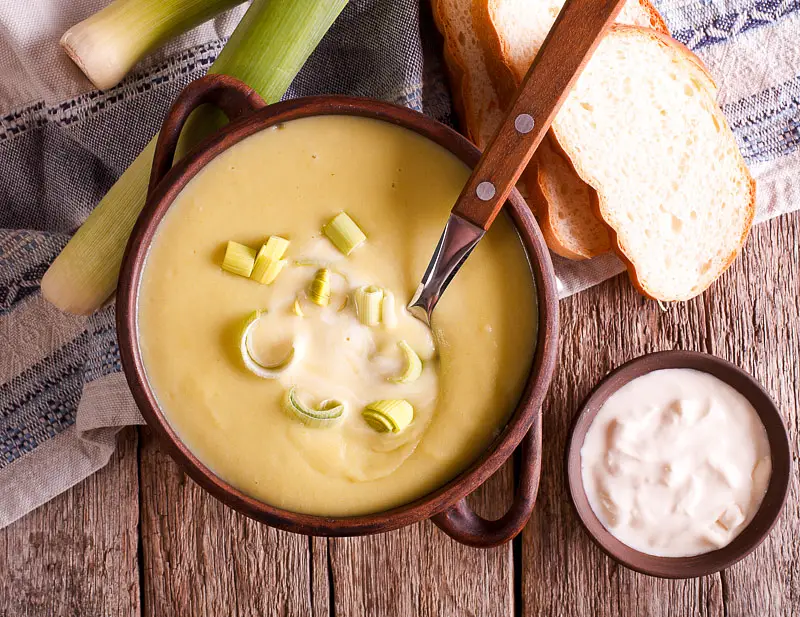
It is the right choice for a pale, elegant soup like Chilled Vichyssoise, where you want clean leek and potato flavor with no roasted edge.
Veloute sauce, cream soups, and risotto all lean on it. It also makes a clean base for consomme, since there is no roasted flavor to clarify around.
Substitutes
A mild store-bought chicken stock is the closest swap, especially a low-sodium one. Pick the palest carton you can find so it does not darken your sauce.
In a pinch, brown stock works but changes the dish. It tints a cream sauce beige and brings a roasted flavor you may not want, so use it knowing the look will shift.
No bones on hand? Simmer water with an onion and a few chicken wings for an hour. It stays pale and adds gentle flavor, though it is thinner than a long stock.
Buying and Storing It
Made fresh, white stock keeps 4 to 5 days in the fridge and freezes for up to 6 months. Cool it fast in an ice bath before chilling so it does not sit warm.
It still sets to a soft jiggle when cold even though it is pale. The gelatin comes out the same whether or not the bones are roasted.
The general rules for simmering and salting live on the stock page.
Quick facts
- In Chinese
- 白猫股份
- British (UK) term
- White stock
- en français
- fond blanc
- en español
- blanco stock
Recipes using white stock
There are 2 recipes that contain this ingredient.


Roast Pork Loin with Cream Gravy


Sage-rubbed bone-in pork loin roasted on chine bones with a silky cream gravy built from pan drippings, mirepoix, stock, milk, and roux. A professional-quality Sunday roast.