What Is Pecorino cheese and How Can I Use It?
Wondering what to do with pecorino cheese? This guide covers how to pick it, cook it, store it, and swap it, plus 18 recipes to put it to work.

Key Points
- Pecorino is Italian sheep's-milk cheese; Pecorino Romano is the hard, salty, sharp grating type.
- It is built to grate over pasta and is the traditional cheese in a true carbonara.
- Pecorino is much saltier than parmesan, so hold back the salt and let it carry the seasoning.
- Add it off the heat with starchy pasta water; over high heat it clumps and turns stringy.
- Parmesan is the easy swap; manchego matches the sheep's-milk character most closely.
What is pecorino cheese?
Pecorino is the family name for Italian cheeses made from sheep's milk. The word comes from pecora, Italian for ewe. That sheep's milk gives pecorino a sharper, saltier edge than a cow's-milk cheese.
The one most cooks mean is Pecorino Romano, a hard, dry grating cheese aged at least five months until it is firm enough to shave into curls. It is bright white and intensely salty, the classic grating cheese of central and southern Italy.
Other pecorinos exist, from soft young table wheels to the nutty aged Pecorino Toscano, but if a recipe just says pecorino, it almost always means the sharp Romano.
How to use pecorino
Pecorino Romano is built for grating. It is too hard and salty to eat in big slabs, but shaved fine over a hot plate it dissolves into a salty, savory hit that defines Roman pasta.
It is the soul of carbonara.
Tossed with egg and rendered pork off the heat, finely grated pecorino emulsifies into a glossy, sharp sauce, the whole point of a 20 Minute Penne Carbonara for Two or a classic Penne Carbonara.
It also seasons from the inside. Worked into a stuffing or braise it brings salt and depth at once, the way it lifts an Italian Braised Lamb & Potatoes.
The trick with any cheese this salty is to add it off the heat and taste before you reach for more salt, since pecorino is doing both jobs.
Pairing and common mistakes
Pecorino loves bold, rustic company. Black pepper, garlic, cured pork, and fava beans all suit it, and a wedge with a drizzle of honey or a ripe pear makes a fine end to a meal.
The most common mistake is salting a dish as if the cheese were not there. Pecorino is much saltier than parmesan, so a pasta seasoned normally and then finished with pecorino often ends up too salty. Hold back on the salt and let the cheese carry it.
The other slip is melting it into a hot sauce too fast. Like any hard aged cheese, pecorino clumps and turns stringy over high heat, so pull the pan off the burner and stir it in gradually with a little starchy pasta water.
Substitutes
Parmesan is the obvious swap, milder, nuttier, and less salty than pecorino. Use a little extra to make up the flavor and add a pinch of salt only if the dish needs it. The two are close enough that many cooks blend them.
Aged asiago or a dry, sharp grana also stand in for grating, each a touch gentler than Pecorino Romano. None will be quite as pungent, so taste and adjust.
For a true sheep's-milk character, an aged manchego from Spain is the closest cousin, drier and a bit sweeter but unmistakably made from ewe's milk. It grates well over pasta and roasted vegetables.
Buying and storing pecorino
Buy Pecorino Romano in a wedge cut from the wheel rather than pre-grated, since the pre-shredded tubs lose punch fast and often hide fillers. Look for a firm, bright-white paste and the stamped rind that marks the real thing.
Genuine Pecorino Romano is one of Italy's oldest cheeses, a staple ration of Roman legions, which is part of why it travels and keeps so well.
Wrap a wedge in wax paper or parchment, then loosely in foil. Store it in the warmest part of the fridge.
Because it is hard and low in moisture, pecorino keeps a month or more this way and freezes well for grating. Save the spent rind to simmer in a soup or sauce, where it melts slowly and leaves behind a deep, savory richness.
Quick facts
Where to find pecorino cheese: Pecorino cheese is usually found in the cheeses section or aisle of the grocery store or supermarket.
- In Chinese
- 羊奶酪
- British (UK) term
- Pecorino cheese
- en français
- fromage pecorino
- en español
- queso de oveja
Recipes using pecorino cheese
There are 18 recipes that contain this ingredient.
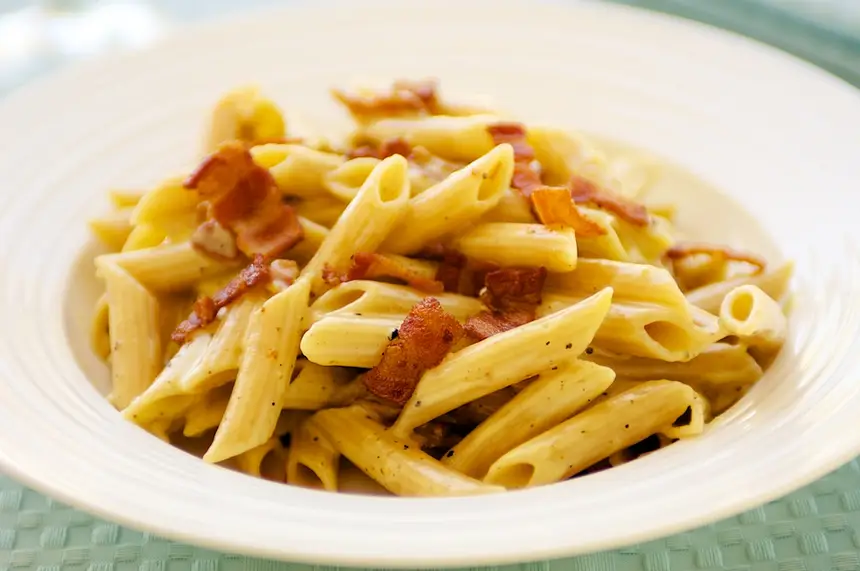
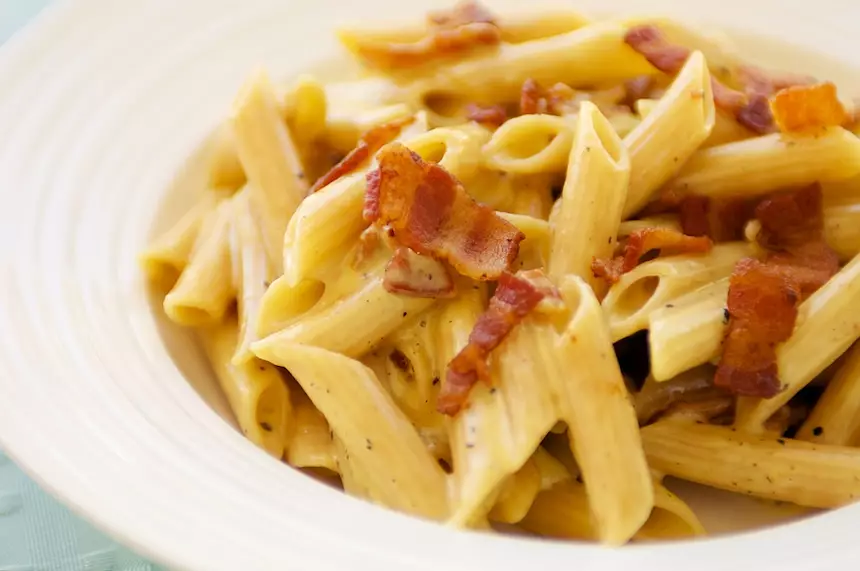
20 Minute Penne Carbonara for Two


Italian pasta Carbonara for two using 6 simple ingredients and perfectly sized for two servings. Best of all this can be served in about 20 minutes.

Shrimp Spiedini with Pesto, New Potatoes & Chickpea Aioli
Grilled shrimp skewers drizzled with homemade basil pesto and a creamy chickpea-mint aioli, served alongside pesto-dressed new potatoes. A showpiece Italian summer plate for the grill.

Tortelloni Di Zucca
Handmade tortelloni stuffed with acorn squash, escarole, ham, and ricotta, finished in a buttery pecorino-tomato cream sauce. An Italian masterclass worth every minute.
Veal Farsu Magru

Also known as farsumagru, or "false lean," this Italian Sicilian recipe uses lean, low-fat meats to create a rich Italian meat roll.

Vermicelli with Walnuts & Garlic
Vermicelli tossed with toasted walnuts, garlic-infused olive oil, pecorino cheese, and fresh parsley. A rustic Italian pantry pasta that comes together while the water boils.
Italian Braised Lamb & Potatoes
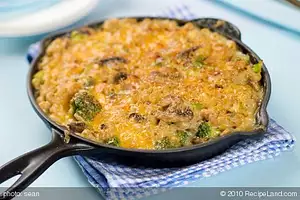
Italian braised lamb and potatoes with pecorino cheese, red capsicum, and garlic simmered in stock until fork-tender. A make-ahead casserole that tastes even better the next day.
Stinging Nettle Tagliatelle with Hot Sausage
Tagliatelle tossed with crispy hot Italian sausage, wilted kale, chicken stock, and sharp pecorino cheese. A rustic Italian pasta that comes together in 40 minutes flat.

Celery Soup (Zuppa Di Accia)
Zuppa di Accia is a rustic Italian celery soup ladled over toasted bread with hard-boiled eggs, dried sausage, and sharp cheeses. A Tuscan bowl that warms the soul.


Polenta Pasticciata - Polenta Lasagne
Polenta pasticciata layers firm cooled polenta squares with porcini-spiked beef ragù, plum tomatoes, and grated pecorino into a rustic Northern Italian bake. Lasagne, but with cornmeal instead of pasta.
Nothing for Dinner I.E.S.Jjgf65A
Pantry linguine with clams, marinated artichoke hearts and black olives in a garlicky olive oil sauce. A 30-minute Italian-style pasta built entirely from cans and jars, finished with grated pecorino and red pepper flakes.
Pasta Al 'Alfredo
Alfredo pasta with heavy cream, Parmigiano-Reggiano, and Pecorino Romano finished with a dash of nutmeg. A rich, authentic Italian cream sauce with just 5 ingredients.
Grilled Autumn Pizza
A grilled, rather than baked, pizza with some unexpectedly delightful toppings. Use these ideas as a starting point and get creative with your toppings... the possibilities are endless! Enjoy with a salad and your favorite flass of wine! Cook time does not include dough's rising time. Can be ovenbaked if grill is not available

Jumbo Shrimp Marsalla
Sicilian-style jumbo shrimp in a sweet-and-sour Marsala sauce with pine nuts, currants, capers, and fennel. A rustic Italian seafood main baked in an earthenware casserole.
Jumbo Shrimp Marsalla, Housewife Style
Sicilian-style jumbo shrimp baked in Marsala wine with plum tomatoes, pine nuts, currants, capers, and fennel, finished with grated pecorino. A rustic Italian seafood dish in 35 minutes.
Penne with Tomato, Cream, & Five Cheeses
Penne with tomato, cream and five cheeses, parboiled pasta tossed in a tomato-cream sauce loaded with pecorino, fontina, gorgonzola, ricotta and mozzarella, then baked hot until bubbling and browned. A restaurant classic.
Roasted Beet, Onion, & Orange Salad
Roasted beet and pearl onion salad layered with fresh orange slices, a hazelnut oil and orange juice dressing, toasted hazelnuts, and grated pecorino. Earthy, citrusy, vivid: a winter side that holds its own on any dinner platter.