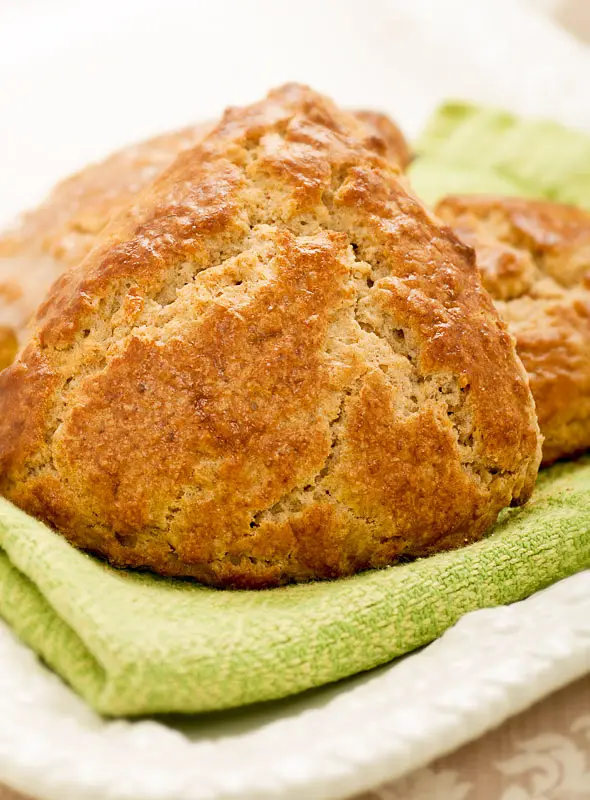
Classic Scottish Scones


Submitted by solunalover
Classic Scottish scones, the real deal: no sugar in the dough, cream-of-tartar leavened, knuckle-flattened and fork-pricked. Lean, tender scones for jam, butter, or proper afternoon tea.
YIELD
12 servingsPREP
15 minCOOK
15 minREADY
30 minThese are Scottish scones the way Scots actually make them: lean, slightly tangy, completely unsweetened, with the sweetness coming from whatever you spread on top. No sugar in the dough means the buttermilk tang and the gentle wheat flavor come through, and the cream of tartar plus baking soda combo (instead of modern baking powder) gives a softer, more old-fashioned rise.
The technique is hands-on and traditional. Rub the butter into the flour with your fingers (a pastry blender works, but fingers warm the butter slightly into the flour and create the proper crumb texture). Knead as little as possible. Flatten the dough discs with your knuckles, not a rolling pin, which keeps the dough light. Then prick deep with a fork; the holes let steam escape during baking and prevent the scones from puffing into rounded mounds.
This recipe has earned 185 reviews because the technique works. The result: tender, biscuit-like Scottish scones with a clean wheat flavor that actually tastes like itself, ready to be paired with whatever good jam or clotted cream you’ve got.
Pro Tips
- Use room-temperature buttermilk and egg, as the recipe specifies. Cold dairy seizes the butter and prevents proper mixing.
- Don’t skip the cream of tartar. It’s what activates the baking soda and gives the soft, traditional rise.
- Flatten with your knuckles for the right texture. Rolling pins compress out air; knuckles gently shape the dough.
- Prick all the way through with the fork tines, about a dozen times per disc.
Variations
Ingredients
Directions
In bowl, mix flour, salt, baking soda and cream of tartar.
Stir thoroughly.
With fingers, rub the butter into the dry ingredients.
Gradually stir beaten egg and buttermilk into the flour mix.
If it is a bit too moist and sticks to hands, add a bit of flour.
Turn the dough onto a lightly floured work surface and knead as little as possible to achieve a soft, pliable dough ball.
Divide dough into 2 equal parts.
Flatten each with the knuckles into a round disc.
About 6 inch in diameter and ½ inch thick. Prick about a dozen times with fork.
Then cut in four sections each.
Bake on lightly greased baking sheet until tan.
At 375℉ (190℃) for about 15 minutes.
You can add ½ cup raisins or currants if you wish.
Serve warm scones with butter or jam if desired.

Comments


This is an awesome treat
Your gay