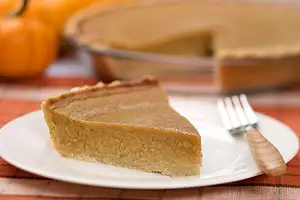
Lemon Cream Meringue Pie

Submitted by rfblake
Lemon cream meringue pie with a zest-infused custard filling, blind-baked flaky crust, and Swiss meringue topping broiled golden. A from-scratch lemon pie done right.
YIELD
8 servingsPREP
60 minCOOK
30 minREADY
180 minThis lemon meringue pie is a three-part project, and every part is done properly. The filling starts by steeping fresh lemon zest strips in warm milk to extract that bright, aromatic oil without any of the bitter pith. That infused milk gets thickened with cornstarch and egg yolks into a silky lemon cream that tastes like real lemons, not lemon extract.
The crust is blind-baked until deep golden brown using pie weights (or dried beans) so it’s fully crisp before the filling goes in. No soggy bottoms here.
The meringue is Swiss-style: egg whites and sugar get warmed over simmering water until the sugar dissolves and the whites reach about 140°F (60°C), then whipped until cool and glossy. This method gives you a stable, marshmallow-like meringue that holds its peaks and won’t weep.
Pro Tips
- Peel the lemon zest with a vegetable peeler, not a grater. You want wide strips that steep and get removed, not fine zest that stays in the filling.
- Temper the egg yolks by whisking in a third of the hot milk first. Dumping yolks straight into boiling milk scrambles them instantly.
- Press plastic wrap directly on the filling surface while it cools. This prevents a skin from forming.
- Watch the broiler like a hawk. The meringue tips go from golden to charred in under a minute.
Variations
- Use lime juice and lime zest for a key lime meringue pie variation.
- Skip the meringue and top with lightly sweetened whipped cream for a simpler finish.
- Add a tablespoon of limoncello to the filling for an Italian twist.
Ingredients
Directions
To make the filling, combine milk and sugar in a nonreactive saucepan, preferably enameled iron.
Strip the zest from the lemons with a sharp vegetable peeler, making sure you remove the yellow zest but none of the white pith beneath.
If you do remove some of the white pith, scrape it off the strips of zest with the point of a paring knife and discard it.
Add the zest to the milk and sugar and bring to a simmer over low heat.
Remove from heat and allow to steep for 5 minutes; remove the strips of zest with a slotted spoon or skimmer and discard them.
Squeeze lemons to make ½ cup strained juice.
Place juice in a mixing bowl and whisk in cornstarch, then yolks.
Return milk and sugar mixture to a boil over low heat and whisk about a third of the boiling milk into the lemon juice mixture.
Return remaining milk and sugar mixture to a boil once more and whisk the lemon juice and yolk mixture back into it, whisking constantly until the filling comes to a boil and thickens.
Allow to boil, whisking constantly, for about 30 seconds.
Remove from heat, whisk in butter and pour into a nonreactive bowl.
Press plastic wrap against the surface of the filling and chill until it is approximately 75 degrees.
(If you prepare the filling in advance, let it come to room temperature before proceeding).
Set a rack at the middle level of the oven and preheat to 350℉ (180℃).
Roll out the dough to make bottom crust and arrange in pan.
Chill crust until firm.
To bake the crust, pierce it all over with the tines of a fork at ½ inch intervals.
Line it with a disk of parchment or wax paper and fill with cherry stones or dried beans.
Bake about 20 minutes, until lightly colored.
Remove paper and beans and continue baking until the crust is a deep golden brown.
Cool crust on a rack. Spread the cooled filling evenly in the cooled crust. Set a rack at the middle level of the oven and preheat to 400 To make the meringue bring a small pan of water to a boil. Lower heat so that water simmers. Combine egg whites, sugar and salt in the bowl of the mixer or if you are using a hand whisk another heat-proof bowl. Place bowl over pan of simmering water and whisk gently for about 2 minutes, until egg whites are hot (about 140 degrees) and sugar has dissolved. Whip meringue on medium speed until it has cooled and is able to hold a shape, but it should not be dry. Distribute spoonfuls of the meringue all over the top of the pie, then use the back of a spoon or a small offset metal spatula to spread the meringue evenly. It should cover the top of the pie and touch the edges of the crust all around. Here and there, bring up the surface. Place under broiler for about 3 minutes, or until meringue tips are golden. Keep careful watch this does not burn!

Comments