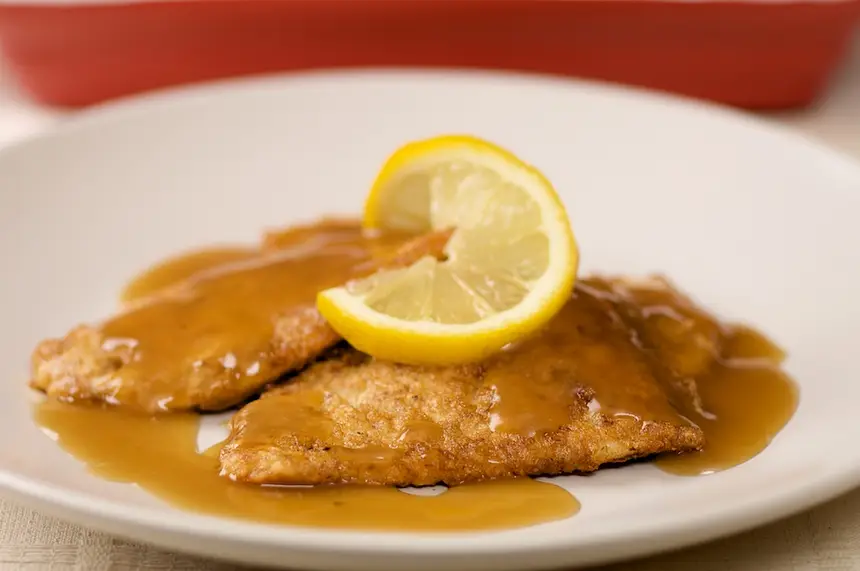




Chicken French


Submitted by evanslisa
Turned out very well. I seasoned the chicken on both sides with salt and pepper before dipping in the flour and egg. The thin sauce added a nice tang. I also added a teaspoon of cornstarch blended in water to the sauce and cooked for about one minute to thicken up the sauce a bit.
YIELD
6 servingsPREP
20 minCOOK
30 minREADY
50 minIngredients
Directions
Cut the chicken into tenders (about a ½ wide strip) and pound them out. They cook quicker this way. A meat mallet or side of a cleaver will do this job.
Pour the oil into a fry pan and add 1 to 2 tablespoon of butter into a large fryer and melt together. Med to Med High heat. The egg should bubble on contact.
Dip the meat into the flour covering both sides. Using a fork dredge the meat through the egg wash covering both sides.
Place chicken into the fryer and fry until golden brown on both sides.
When brown remove from pan onto plate. (try not to get your hands wet as the flour becomes messy).
Sauce:
Into a pan add 1 to 1½ cups of sherry (or white wine). Add the remaining butter and the juice of two lemon strained.
I use two lemons cutting 2 to 3 thin slices from the center to use as garnish and the rest gets juiced through a strainer.
Add chicken stock to this (1 tablespoon chicken stock base and ½ cup of water) to make it richer.
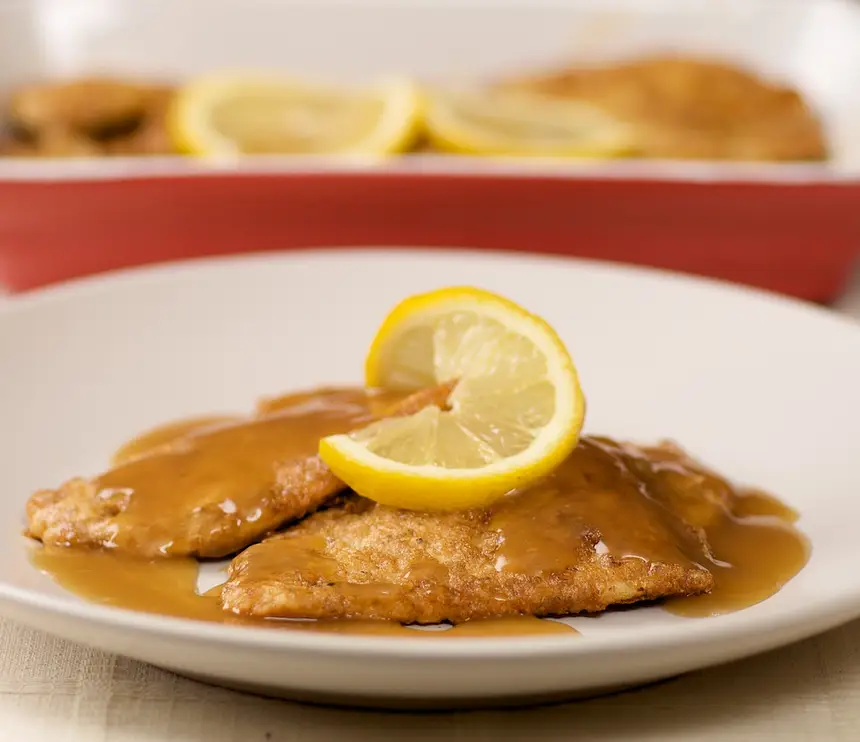
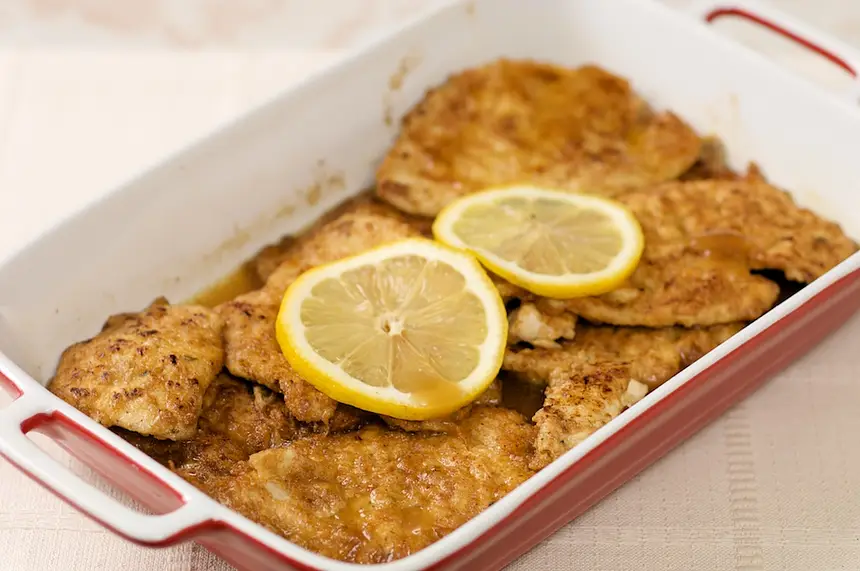
Arrange chicken into baking dish and pour over the sauce. Place lemon on to top of the chicken (as a garnish) and cover with foil.
Place into oven at 225 to 250 degrees F for 15 to 30 minutes (this is to keep it warm).

Comments




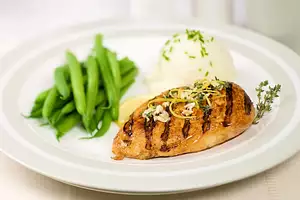

This recipe turned out great, thank you!
was delicious!
I made this the other day, although I didn't have fresh lemons on hand I used a couple splashes of lemon juice. I could have used a little more as it wasn't real lemony flavored, but it was very good and I will make this again
How much lemon juice would I use instead of using the real lemons?
Use two to three tablespoons of lemon juice first, then taste it. You can always add more if it is not enough. Hope this helps! Happy Cooking :)
I am doing this chicken for my gcse does it have to go in the oven ? X