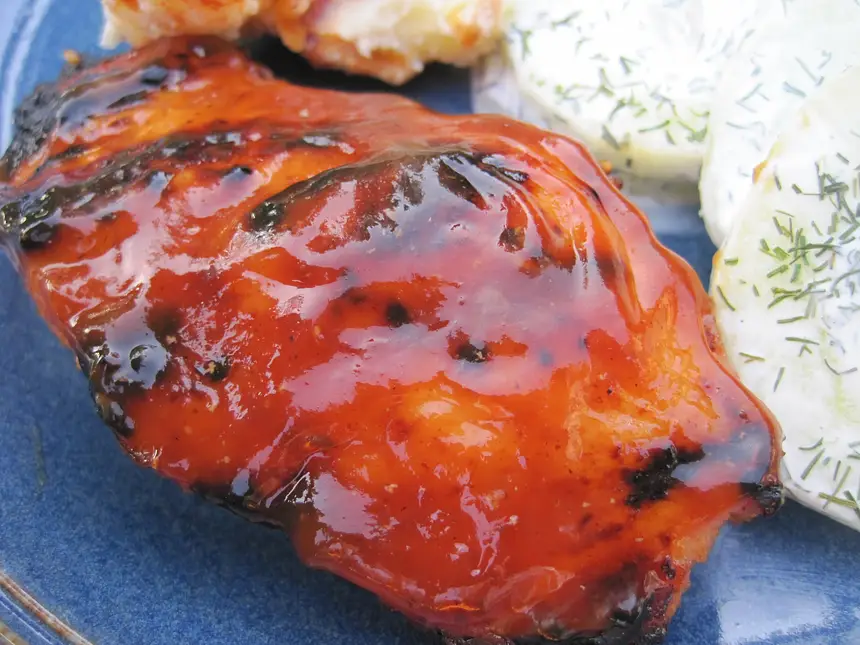
Pork Kabobs with Barbecue Sauce

Submitted by bunny
Pork tenderloin kabobs marinated in homemade chile barbecue sauce with molasses, jalapeños, and Dijon mustard. Broiled or grilled until juicy. Served with steamed cabbage.
YIELD
6 servingsPREP
25 minCOOK
30 minREADY
4 hrsThese pork kabobs lean on a homemade chile barbecue sauce that’s better than anything bottled. Tomato puree gets simmered with molasses, pickled jalapeños, garlic, Dijon mustard, and red wine vinegar until it thickens into a sweet-tangy-spicy glaze with real depth.
The pork tenderloin marinates in the sauce for at least 4 hours (overnight is better), which lets the molasses and acid penetrate the meat and tenderize it from the inside. The leaner the cut, the more it benefits from this treatment, and tenderloin is about as lean as pork gets.
A quick broil or grill caramelizes the sugars in the sauce into a sticky lacquer on the outside while the inside stays juicy. Serve over steamed cabbage to soak up the extra sauce.
Pro Tips
- Soak bamboo skewers in water for at least 30 minutes before threading. Dry skewers char and snap on a hot grill or under the broiler.
- Trim the silver skin off the tenderloin before cubing. That tough membrane shrinks during cooking and pulls the meat into uneven shapes.
- Don’t marinate longer than 24 hours. The vinegar and acid in the sauce break down the protein, and over-marinated pork turns mushy.
- Reserve sauce for serving before the meat ever touches it. Sauce that’s been in contact with raw pork is unsafe to brush on cooked meat without re-boiling.
- Pull pork at 145°F (63°C) for juicy, slightly pink meat. Resting for 5 minutes after broiling redistributes the juices.
Variations
Ingredients
Directions
Prepare Chile Barbecue Sauce.
Trim fat from pork tenderloin. Cut pork into 1½ inch cubes.
Mix pork and 1¼ cups of the sauce in large glass or plastic bowl.
Cover and refrigerate at least 4 hours but no longer than 24 hours.
Cover and refrigerate remaining sauce. Set oven control to broil.
Thread pork on six 10-inch skewers.
Spray broiler pan rack with nonstick cooking spray.
Place pork on rack in broiler pan. Broil with tops 3 inches from heat 5 minutes; turn.
Brush with ¼ cup of the sauce. Broil about 5 minutes longer or until pork is no longer pink.
Serve with remaining sauce over steamed cabbage if desired.
6 servings * If using bamboo skewers, soak skewers in water at least 30 minutes before using to prevent burning.
CHILE BARBECUE SAUCE: Heat all ingredients to boiling over medium heat; reduce heat to medium-low.
Cook uncovered 15 minutes, stirring occasionally

Comments