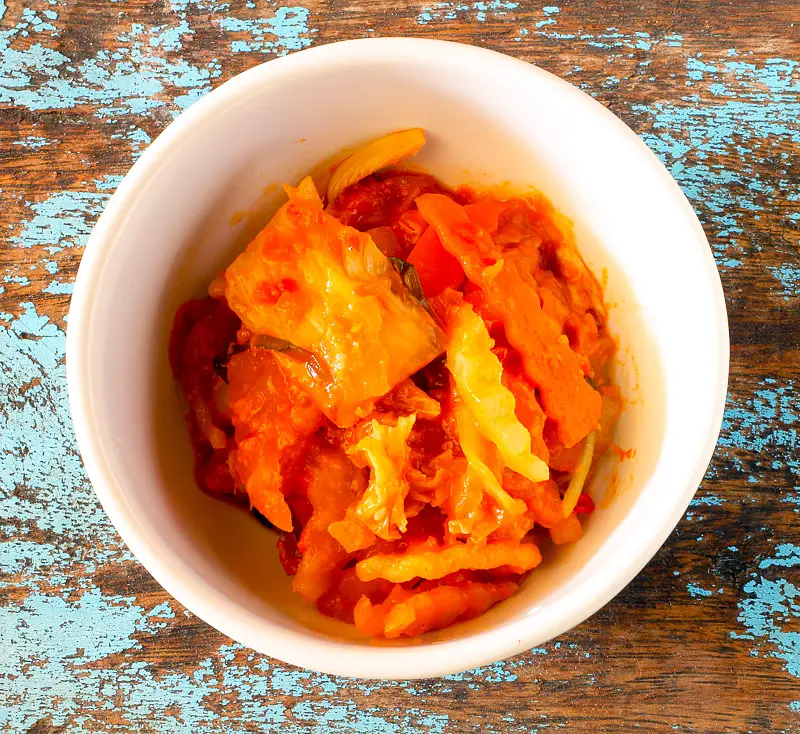
Cabbage, Carrot, & Green Pepper Kimchi


Submitted by jesy1
Three-vegetable kimchi: napa and green cabbage with carrots, scallions, and bell pepper fermented with a heavy garlic-red pepper-paprika paste. Big-batch Korean pickle, ferments 2-3 days at room temperature.
YIELD
48 servingsPREP
25 minCOOK
20 minREADY
2 daysThis is a generous, family-sized kimchi (the recipe yields 48 servings) that combines napa cabbage, regular green cabbage, carrots, scallions, and green bell pepper. The two-cabbage approach is the secret to texture: napa goes silky and tender, while regular cabbage keeps its crunch even after fermenting.
The salt-kneading step on the regular cabbage is non-negotiable. Working salt into the leaves with your hands breaks down the cell walls so they can ferment properly and absorb the spicy paste without staying tough. Napa is more tender and only needs a salt sprinkle, no kneading.
The spice paste is heavy on garlic (3 to 4 whole heads, ground in a blender), red pepper, paprika, and sugar. It tints the cabbage red as you mix and provides the funky, fiery character that defines real kimchi. Be aggressive when blending the garlic in one clove at a time. This is not a dish for the timid.
The room-temperature ferment for 48 to 72 hours is what transforms raw vegetables into proper kimchi. The wild yeasts and bacteria on the cabbage start the lactic fermentation that creates the signature tang.
Pro Tips
- Use a clean kitchen sink as your work surface, exactly as the recipe says. There’s no other vessel big enough for the salt-kneading step.
- Pack the kimchi tightly into a glass jug, pressing out air pockets. Oxygen kills the good bacteria and grows the bad.
- Taste daily. Pull from room temp and refrigerate when the tang hits your preferred level. Cold storage slows fermentation but does not stop it.
- Use proper Korean gochugaru (red pepper flakes) if you can find it. The paprika in this recipe is a Western substitution.
Variations
- Skip the MSG if you prefer; the kimchi still ferments and tastes great.
- Add fish sauce, salted shrimp, or anchovy paste for proper Korean umami depth.
- Stir in grated daikon radish for a more traditional baechu kimchi texture.
Ingredients
Directions
Clean the kitchen sink as this is where you will be working.
Cut the regular cabbage into 2 to 3 inch pieces.
Place the cabbage in the sink and add the salt.
Work in the salt using a kneading motion, until the cabbage is broken up.
The Chinese cabbage should now be cut up and added; no kneading required.
Let this stand for 5 to 10 minutes and then rinse once or twice and drain well.
Shred the carrots, with a potato peeler or a fine food processor shredder.
Cut the green onions into 2 inch pieces, using all of the onions.
Cut the green peppers into ½ inch lengths.
Grind up the red pepper and the garlic heads in a blender.
Blend the garlic into the mixture one clove at a time, using 3 to 4 heads, depending on the size of the heads.
Mix the ground up garlic and red pepper mixture, paprika, garlic salt and sugar.
Blend this mixture into the cabbage.
Mix well until all of the Chinese cabbage is tinted red.
Add small amounts of water as you mix to keep the cabbage moist.
Taste and add more salt if necessary, about 1 tablespoon at a time; add more garlic salt instead if more garlic is also needed.
Add about ¾ cup of water; press into a 1 gallon jug, glass is best.
Leave outside refrigeration for 48 to 72 hours.

Comments


1/2 way through the procedure the instructions mention red pepper. There is no red pepper in the list of ingredients (??)