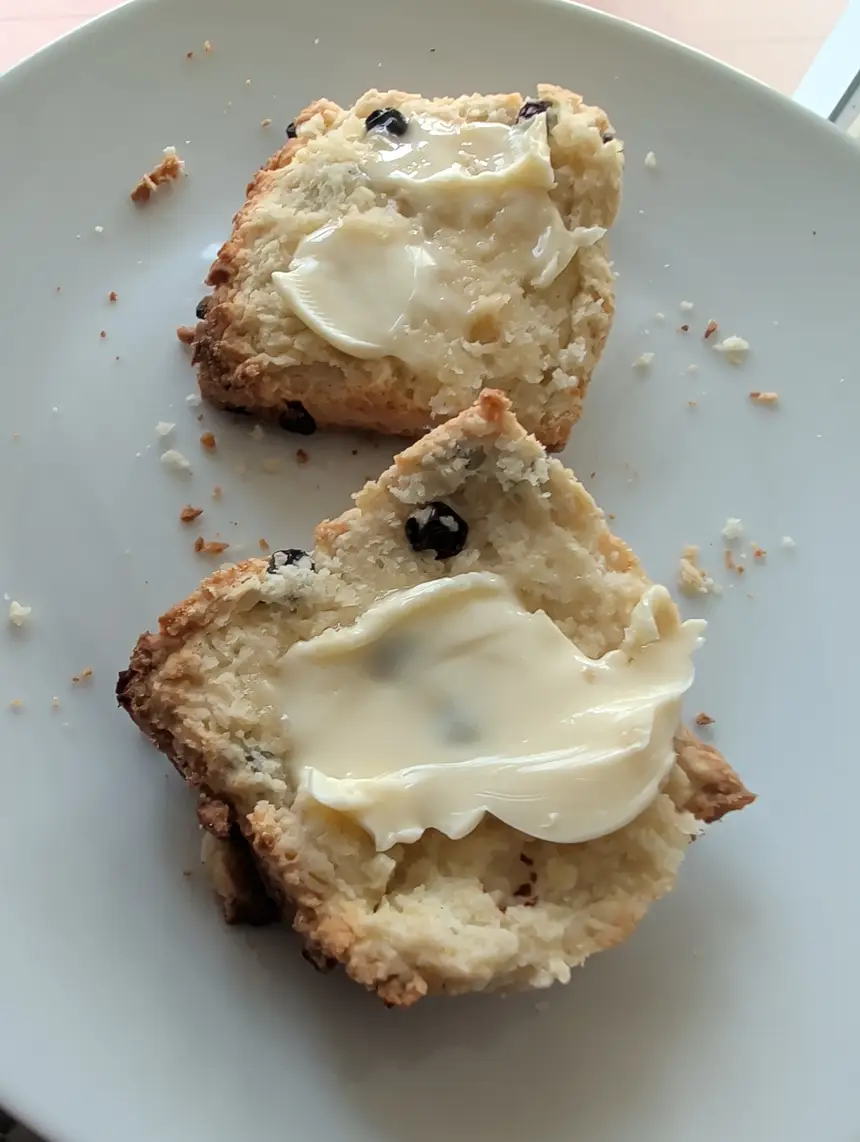
Best Buttermilk & Currant Scones

Submitted by sphynx
Buttermilk currant scones with a tender, lightly sweet crumb and bursts of dried currants. Cut into rounds and baked golden, served warm with butter, cream, and jam in the British tradition.
YIELD
24 servingsPREP
12 minCOOK
18 minREADY
30 minThese buttermilk currant scones are the British cream-tea staple, the kind served warm in a basket alongside clotted cream and a pot of strawberry jam. The recipe stays close to traditional: cold butter rubbed into flour, dried currants for chewy bursts, and tangy buttermilk that activates the baking soda for lift.
The buttermilk is doing double work. Its acid reacts with the baking soda to create the rise, and its tang gives the finished scones a faint sour note that balances the sweetness of the currants and any jam you serve alongside. American sweet-cream scones taste sweeter and richer; these stay closer to a savory biscuit than a dessert.
Dried currants are the right choice here, not raisins. Currants are smaller, drier, and chewier, which means they distribute evenly through the dough and don’t turn into juicy raisin pockets that water down the texture. If you can only find raisins, chop them roughly before adding.
Round cutters rather than wedges keep the scones uniform in size and bake more evenly. Cut them straight down without twisting the cutter, which seals the edges and prevents the scones from rising fully on the sides.
A milk wash before baking gives the tops a soft golden sheen rather than the deep brown gloss of an egg wash. The lighter finish suits the casual, homestyle look of a proper afternoon tea scone.
Pro Tips
- Keep the butter cold and work fast. Warm dough produces flat, dense scones instead of light, layered ones.
- Don’t overwork the dough. A few quick pats and folds are all it needs; kneading develops gluten and toughens the texture.
- Cut straight down with the cutter and resist twisting. Twisted edges seal the layers shut and prevent rising.
- Eat them warm. Scones go stale within hours, so plan to serve them the day they’re baked.
Variations
- Swap dried cranberries or chopped dried apricots for currants for a fruitier, brighter scone.
- Add grated orange zest to the dry ingredients for a citrus lift.
- Glaze the cooled scones with a thin lemon icing for a more dessert-like finish.
Ingredients
Directions
Preheat oven to 425=B0F. Lightly flour large baking sheet.
Mix 3 cups flour, sugar, baking soda and salt in large bowl.
Add butter and rub in with fingertips until mixture resembles fine meal.
Mix in currants. Mix in egg and enough buttermilk to form soft dough.
Turn dough out onto floured surface. Pat dough into ¾ inch-thick round.
Cut out rounds, using 2½-inch round cookie cutter.
Gather scraps, press together and pat out to ¾ inch-thick round.
Cut out additional rounds. Transfer scones to prepared baking sheet.
Brush tops with milk. Bake until scones are golden brown and cooked through, about 18 minutes.
Serve warm with butter or whipped cream and jam.

Comments


