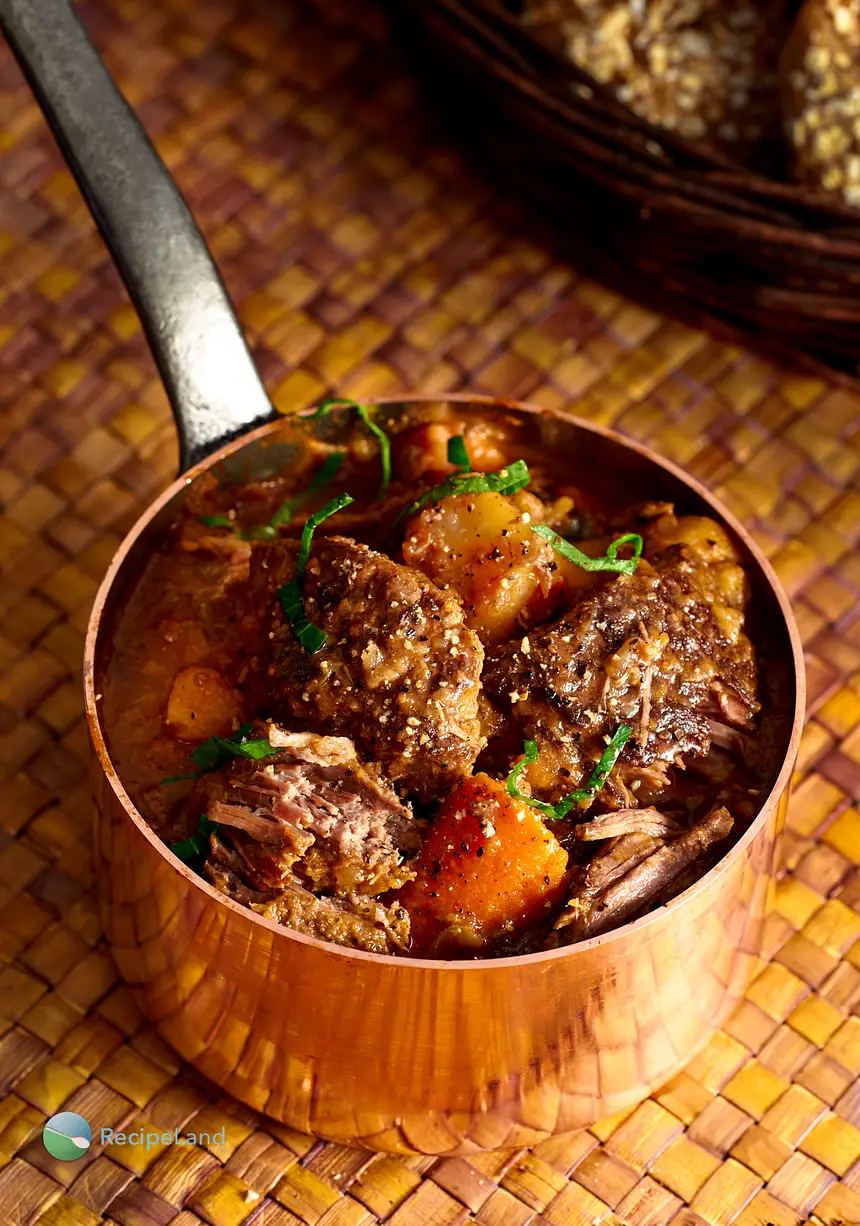
Belgian Beef Stew

Submitted by jem03
Belgian beef stew braised in beer with sauerkraut, green olives, marjoram, and a finish of cream. A carbonnade-style oven braise with tangy, complex flavors.
YIELD
8 servingsPREP
30 minCOOK
90 minREADY
120 minThis is a riff on carbonnade flamande, the Belgian classic of beef braised in beer. But this version goes further with two pounds of rinsed sauerkraut, sliced green olives, marjoram, celery seed, and an optional pour of cream at the end. It’s a stew with serious depth and a tangy backbone you won’t find in a typical beef braise.
Dredging the beef cubes in flour before browning serves two purposes. It creates a crust that sears beautifully in hot oil, and that same flour thickens the braising liquid as the stew cooks. Brown the meat in batches without crowding. Every cube needs contact with the hot pan bottom. Steamed gray meat won’t give you the flavor base this stew needs.
The onions go in after the meat and cook for a full 6-7 minutes until soft and light brown. They practically dissolve during the 90-minute oven braise, becoming part of the sauce rather than a distinct ingredient.
Rinsing and squeezing the sauerkraut dry is essential. Straight-from-the-jar sauerkraut would make this stew aggressively sour. A rinse tames the acidity while keeping that fermented tang that makes this dish distinctly Belgian.
The optional cream stirred in at the end transforms the sauce from a thin, beer-based broth to something silky and rich. It mellows the sauerkraut’s edge and rounds out the beer’s bitterness.
Pro Tips
- Use a Belgian-style ale or a darker lager for the most authentic flavor. IPAs and heavily hopped beers become bitter during the long braise.
- Scrape the bottom of the Dutch oven when adding the beer. All those browned bits (fond) from searing dissolve into the liquid and add massive flavor.
- Stir occasionally during the oven braise. The sauerkraut can settle and stick to the bottom.
- This stew tastes even better the next day after the flavors have fully merged overnight.
Variations
- No sauerkraut: Replace with 2 pounds of thinly sliced white cabbage for a milder, more traditional carbonnade approach.
- Dark beer version: Use a Belgian dubbel or a dark stout for a richer, almost chocolatey broth.
- Skip the cream: The stew is excellent without it. The tangy, beer-forward version is more traditional and lighter.
Ingredients
Directions
PREHEAT OVEN TO 325℉ (160℃).
Dredge the meat in flour. Heat 3 tablespoons of oil in a Dutch oven.
Add only enough meat to cover the bottom of the pan without crowding and brown on all sides, scraping and turning the cubes so that they don’t burn.
Remove the meat with a slotted spoon to a bowl, and continue until all the meat is browned, adding fresh oil as needed.
If the oil has burned or more oil is needed, add the remaining 2 tablespoons of oil to the pot.
When it is hot, add the onions and cook for 6-to-7 minutes more, stirring frequently until they are light brown and soft.
Stir in the garlic. Add the meat, salt, pepper, beer, sauerkraut, marjoram, brown sugar, celery seed, bay leaf and olives and stir to mix well.
Cover and transfer the casserole to the oven for 1½ hours.
Stir occasionally.
After the meat is tender, remove the bay leaf, skim off any excess fat and stir in the cream, if desired.
Add the parsley.

Comments