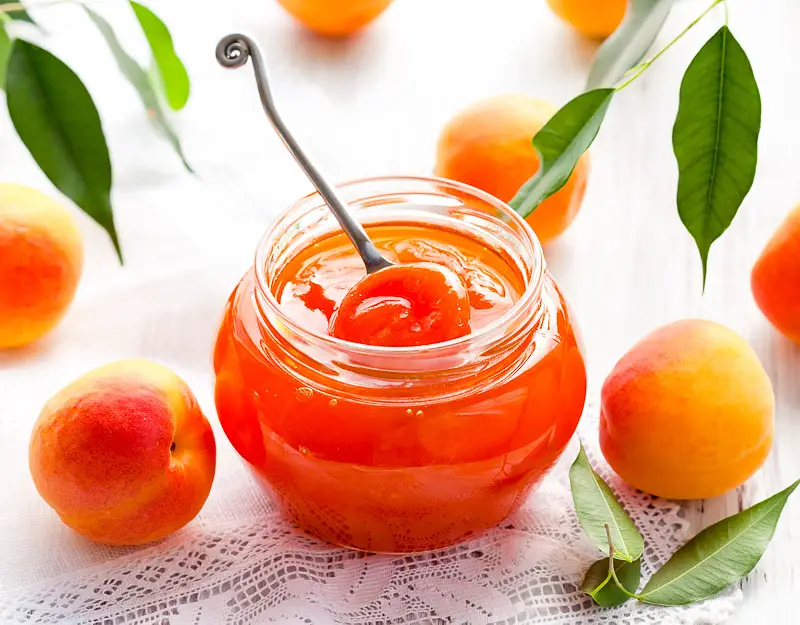
Harvest Apricot Preserves


Submitted by Ronnie
Harvest apricot preserves cook a big batch of ripe apricots with sugar and lemon juice to setting point, then jar and seal with rum-dipped cellophane tops. An old-world summer preserve.
YIELD
120 servingsPREP
20 minCOOK
70 minREADY
90 minThis is the way preserves used to be made before pectin packets and digital thermometers: ripe summer apricots, sugar, lemon juice, and patience. Nine pounds of pitted, very ripe fruit cooked down in a wide preserving pan with sugar until the jam reaches setting point. Skim off the foam constantly so the finished jar stays clear and bright orange instead of cloudy.
A splash of lemon juice goes in shortly before the end. The acid is what activates the natural pectin in the apricot skins, locking the jam into a soft, spreadable set. The traditional finish is a stir of “Preserving Aid” (sodium benzoate or commercial pectin) dissolved in hot water for extra insurance against spoilage and a firmer set.
The old saucer test still works as well as anything: a spoonful on a chilled plate, leave it a minute, then turn the saucer upside down. If the jam holds, it’s done. Pot up while hot, seal the jars while warm, and label.
Pro Tips
- Use very ripe, almost overripe apricots. Underripe fruit has too little sugar and not enough flavor for a long-cook preserve.
- Skim aggressively. The white foam is air bubbles and impurities; if you don’t pull them off, the jars look murky.
- Use a wide, shallow preserving pan, not a deep stockpot. The water needs surface area to evaporate.
- Sterilize jars in a 250°F (120°C) oven for 20 minutes before filling. Hot jam in cold jars cracks the glass.
Variations
- Add a vanilla pod, a stick of cinnamon, or a few cardamom pods during the cook for a spiced version.
- Stir in ¼ cup blanched slivered almonds at the end of cooking for texture.
- Dial back the sugar to 5 pounds for a less sweet, more tart preserve. The set will be looser.
Ingredients
Directions
Cook apricots and sugar to setting point, continually skimming off foam.
Shortly before done, add lemon juice.
Remove from heat. Stir in ‘Preserving Aid’ dissolved in hot water.
Pour into hot, dry, sterilized jars.
Seal jars with cellophane the top of which has been dipped in rum and smooth the overhang over the jars’ necks, tying with thin twine.
Makes 12 half-liter jars and one quarter-liter jar.
(Between 13 and 14 1 pint jars).
To test for setting point: Spoon a little of the conserve onto a chilled saucer. Leave for a few minutes - then hold saucer upside down. If conserve doesn’t run, then setting point has been reached.

Comments